As an Amazon Associate I earn from qualifying purchases. This page contains affiliate links, and I may earn a commission at no extra cost to you.
The Multi-Generational Game Night Dilemma
Getting three generations around a single table without half the room retreating to their phones is a high-wire act. Trivia games skew heavily toward older family members who remember decades of general knowledge. Word games can feel uncomfortably like classroom exercises for younger players. Social deduction often alienates anyone who hates lying on cue.
Two modern party titles have risen to prominence precisely because they claim to solve this generational divide: Hitster The Music Party Game by Jumbo and Wavelength Telepathic Party Game. One leverages music recognition and chronological guessing; the other challenges teams to calibrate their thinking along subjective spectrums. Both aim to eliminate dead air, but their mechanics produce very different social dynamics at the table.
Overview: Hitster vs Wavelength
| Product | Core Mechanic | Player Count | Price Band | Our Verdict | Link |
|---|---|---|---|---|---|
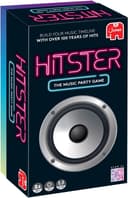
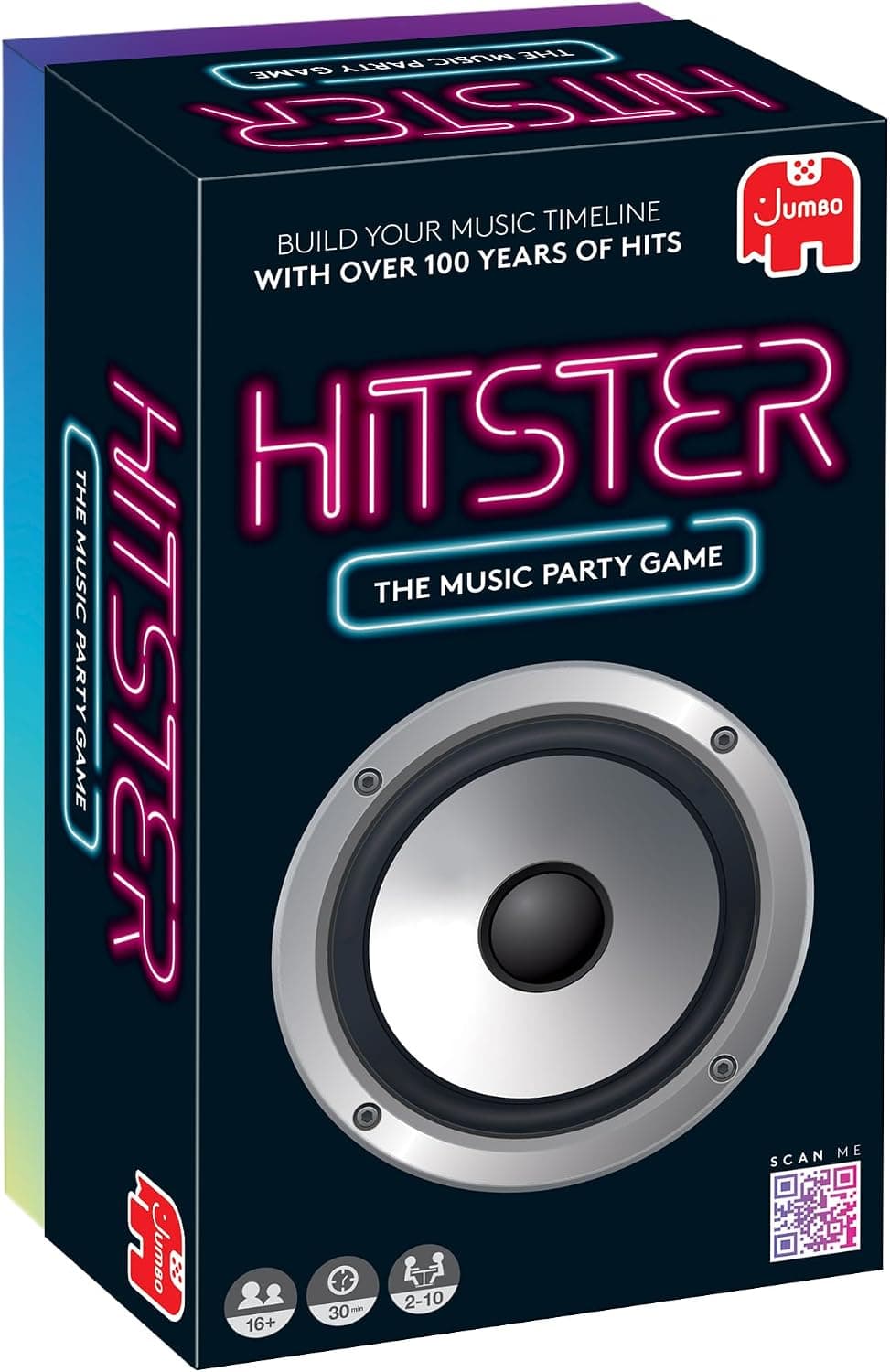
| Hitster The Music Party Game by Jumbo | Timeline ordering & music guessing via Spotify QR codes | 2–10 players (ages 16+) | Mid-range (approx. £20–£25) | Instant singalong energy; perfect icebreaker across eras | See it on Amazon |
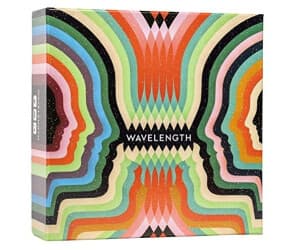
| Wavelength Telepathic Party Game | Dial-based subjective spectrum calibration | 2–12 players (ages 14+) | Mid-range (approx. £25–£35) | Top-tier conversational engine; sparks hilarious debates | See it on Amazon |
| Czech Games Edition Codenames Card Game | Grid-based word association and deduction | 2–8 players (ages 10+) | Budget (approx. £15–£20) | Clever team play, though prone to occasional quiet pauses | See it on Amazon |
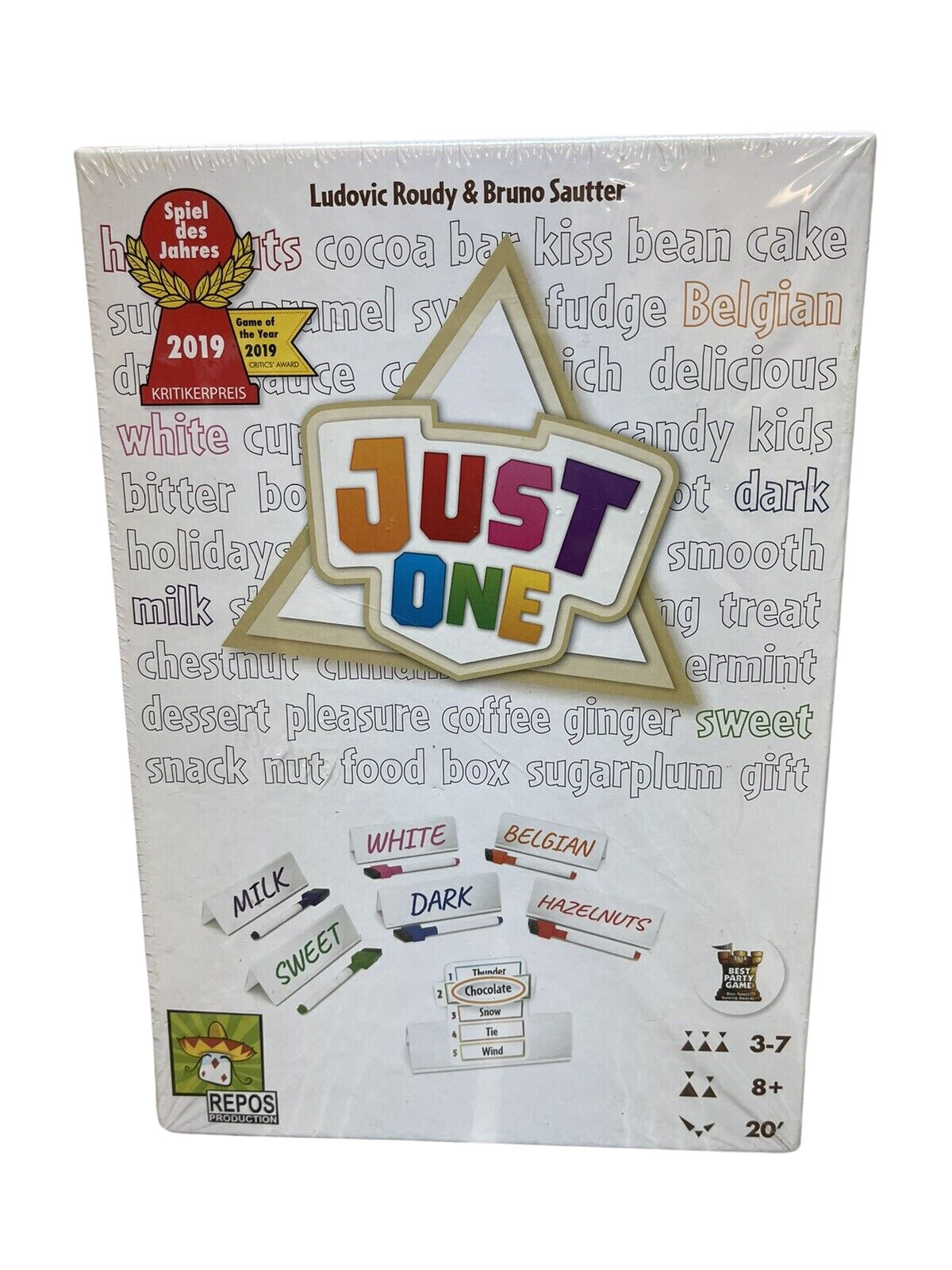
| Repos Production Just One | Cooperative one-word clue elimination | 3–9 players (ages 8+) | Budget (Check price) | Zero-pressure cooperative guessing; unmatched accessibility | See it on Amazon |
| Big Potato The Chameleon Board Game | Hidden imposter bluffing and single-word clues | 3–8 players (ages 14+) | Budget (Check price) | Fast-paced social deduction with fast reset times | See it on Amazon |
Deep Dive: Hitster The Music Party Game
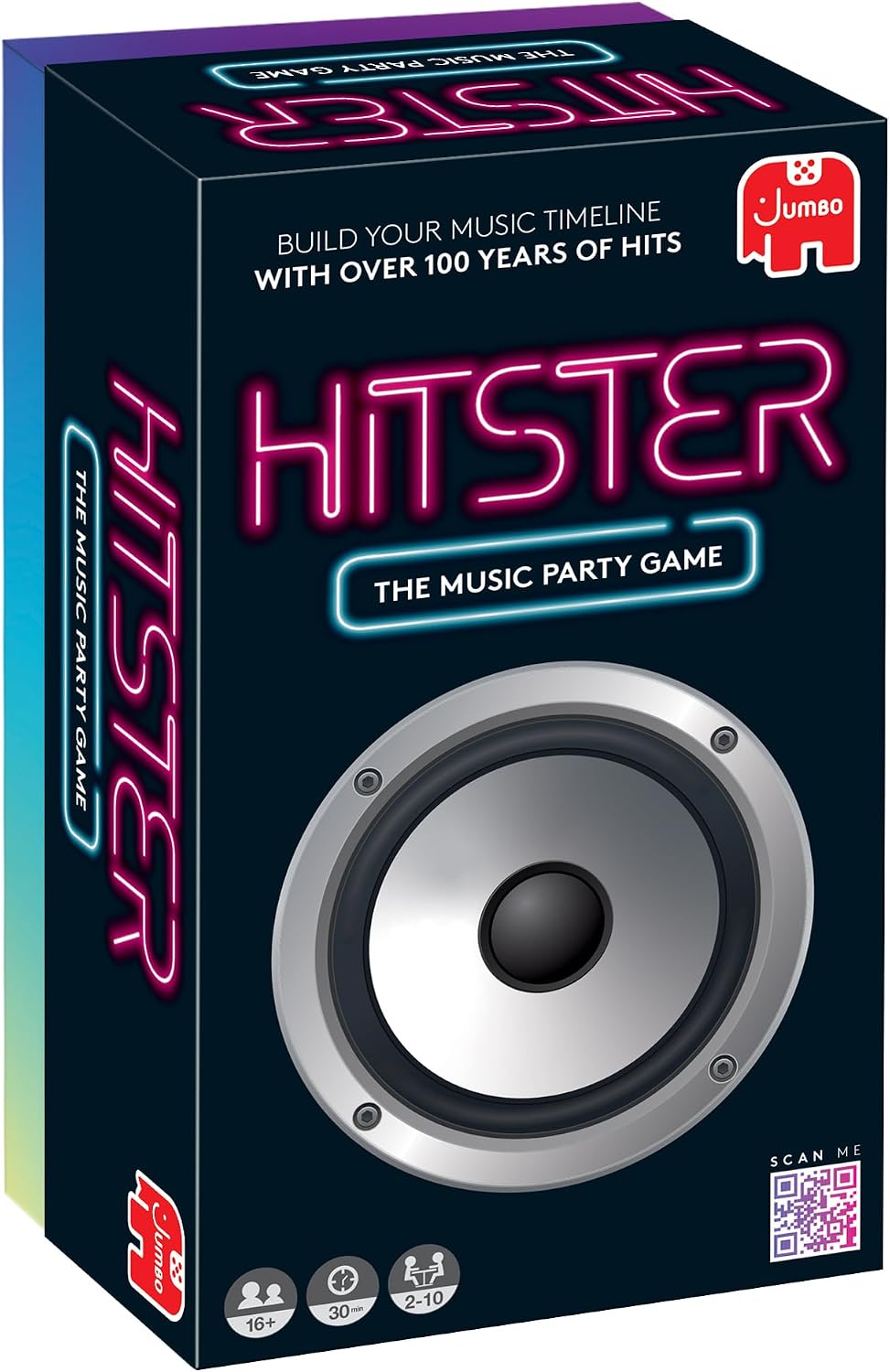
Hitster The Music Party Game by Jumbo is built around a straightforward concept: players scan a QR code on a card using a smartphone (linked with Spotify), a song plays, and the active player must position that song correctly on their growing chronological music timeline. You do not need to name the exact year or artist to score basic points; you only need to determine whether the track was released before, after, or between the cards already on your table.
Components and Setup
The standard box comes with 225 music cards featuring QR codes, alongside tokens that allow players to steal points or challenge an opponent's timeline placement. Setup is minimal: clear a small space on the table, download the free Hitster app on one phone, and connect to a Bluetooth speaker. While a Spotify Premium account offers the smoothest experience by streaming the full track automatically, free Spotify accounts still play short song previews that function adequately for gameplay.
How It Plays Across Generations
Hitster excels at bypassing trivia paralysis. In traditional music quizzes, failing to identify an obscure 1970s prog-rock outfit leaves younger participants sitting silently. In Hitster, a teenager only needs to recognise production values or genre cues to deduce that the song belongs before a 2010s pop track. The physical presence of the timeline levels the playing field significantly. More importantly, it turns the room into an impromptu jukebox. As soon as a well-known track plays, conversation flows naturally into personal memories, and singing along is virtually inevitable.
Deep Dive: Wavelength
Wavelength Telepathic Party Game approaches social engagement from a psychological angle. Created by Wolfgang Warsch, Alex Hague, and Justin Vickers, the game centres on a unique plastic device featuring a rotating wheel and a sliding cover. One player (the psychic) knows where a target zone is hidden on a spectrum—such as "Hot to Cold" or "Guilty Pleasure to Masterpiece"—and provides a single clue to steer their team toward turning the dial to the exact location.
Components and Build Quality
The plastic spectrum console is both tactile and satisfying to operate. The dial has a weighted resistance, and pulling back the screen cover to reveal the scoring zone creates genuine table tension. The box includes a substantial deck of double-sided concept cards covering everything from objective scales (e.g., "Historically Important" to "Unimportant") to wildly subjective cultural opinions.
How It Bridges Generational Differences
Wavelength requires no specialised factual knowledge whatsoever. The entire game hinges on empathy and understanding how other people perceive the world. When an older family member gives a clue for a concept, the younger team members must debate what that clue means from that person's specific viewpoint. This dynamic sparks lively, good-natured disagreements: is a microwave burrito truly "sad food" or merely "practical"? The resulting conversations are frequently hilarious, giving every participant equal footing regardless of age.
Hitster vs Wavelength: Direct Comparison
Rule Complexity and Onboarding
Hitster wins on sheer immediacy. You can explain the basic timeline rule in thirty seconds: "Listen to the song, place it where you think it fits in history." Wavelength requires roughly two minutes to explain how the dial, clue restrictions, and opposing team counter-guesses work. Neither game presents a steep learning curve, but Hitster gets cards on the table faster.
Pacing and Table Atmosphere
The two games create distinctly different social moods. Hitster provides high-energy, continuous background music, turning the room into a lively, singalong atmosphere. Wavelength produces periods of focused debate followed by dramatic reveals and collective cheers or groans. If your gathering thrives on boisterous energy, Hitster is the clearer fit. If your group enjoys debating subjective opinions, Wavelength delivers richer conversations.
Tech Dependence
Wavelength is entirely analogue—no screens, batteries, or internet connections required. Hitster relies on a working smartphone and an active internet connection to scan QR codes and stream tracks. If you are playing in an area with poor mobile coverage or want a completely screen-free evening, Wavelength holds an obvious practical advantage.
Alternative Party Games to Consider
If neither music timelines nor dial-based spectrums fit your gathering, consider these proven social games that also bridge mixed age groups seamlessly:
Czech Games Edition Codenames
For groups who enjoy linguistic puzzles, Czech Games Edition Codenames Card Game remains an absolute staple. Two rival spymasters provide one-word clues linked to a number, attempting to guide their teammates to identify specific word cards on a five-by-five grid while avoiding the hidden assassin. It supports 2 to 8 players, plays in 15 to 30 minutes, and scales brilliantly for teenagers and adults who appreciate strategic wordplay.
Repos Production Just One
If competitive tension causes friction in your household, Repos Production Just One offers a purely cooperative alternative. Players work together to help the active guesser identify a mystery word. Each player writes a one-word clue on their plastic easel, but before revealing them, matching clues are eliminated. It plays smoothly with 3 to 9 players from age 8 upwards, offering zero-stress participation for younger children and grandparents alike.
Big Potato The Chameleon
For those who prefer social deduction with minimal downtime, Big Potato The Chameleon Board Game delivers rapid rounds. Everyone knows the secret word except the hidden Chameleon. Each player says one related word to prove their innocence before voting on who the imposter is. Rounds take less than five minutes, making it ideal for restless family gatherings.
Final Verdict: Which Game Should You Buy?
Both games succeed at engaging mixed generations, but they solve the problem through different channels. If your primary goal is energising the room, sparking immediate nostalgia, and getting people singing along, Hitster The Music Party Game by Jumbo is the overall top pick for family gatherings. Its timeline mechanic removes the dread of traditional trivia, allowing teenagers and grandparents to compete on equal terms.
Opt for Wavelength Telepathic Party Game instead if you prefer an entirely screen-free, analogue experience focused on creative discussions, philosophical debates, and team calibration.