As an Amazon Associate I earn from qualifying purchases. This page contains affiliate links, and I may earn a commission at no extra cost to you.
The Multi-Era Gathering Problem (And How to Fix It)
Few domestic disasters unfold quite as predictably as a mixed-generation games night. Someone pulls out a 1980s edition of Trivial Pursuit, and the teenagers instantly disengage because they have never heard of a Soviet diplomat from 1974. Someone else suggests a fast-twitch charades variant, and the grandparents quietly decline because standing up and miming an action movie feels like an audition they never signed up for. Within twenty minutes, half the room is looking at their phones, and the host is left managing polite, strained silence.
A genuinely great multigenerational party game requires three non-negotiable qualities:
- Sub-three-minute rules explanations: If you cannot explain the complete gameplay loop before someone loses patience and wanders off to make a cup of tea, the game has failed before it starts.
- Zero reliance on era-specific pop-culture trivia: The moment a game tests specific encyclopaedic memory rather than lateral thinking, intuition, or social reads, one half of the room will inevitably dominate while the other checks out.
- Low downtime and simultaneous engagement: Nobody should sit in silence for four minutes waiting for one person to calculate an optimal move.
Based on published rulesets, table footprints, component durability, and verified player feedback across broad age ranges, we evaluated four standout titles that consistently solve the multi-era gathering dilemma for groups of six or more.
Quick Comparison: Party Games for 6+ Players
| Game | Player Count | Learning Curve | Play Time | Price Band | Action |
|---|---|---|---|---|---|
| Czech Games Edition Codenames | 2–8+ (Teams) | 2 Minutes | 15–30 mins | Budget | See it on Amazon |
| CMYK Wavelength | 2–12 (Teams) | 90 Seconds | 30–45 mins | Mid-range | See it on Amazon |
| Big Potato The Chameleon | 3–8 Players | 1 Minute | 15 mins | Budget | See it on Amazon |
| Gamewright Sushi Go Party! | 2–8 Players | 3 Minutes | 20–30 mins | Mid-range | See it on Amazon |
1. Czech Games Edition Codenames – The Gold Standard for Team Wordplay
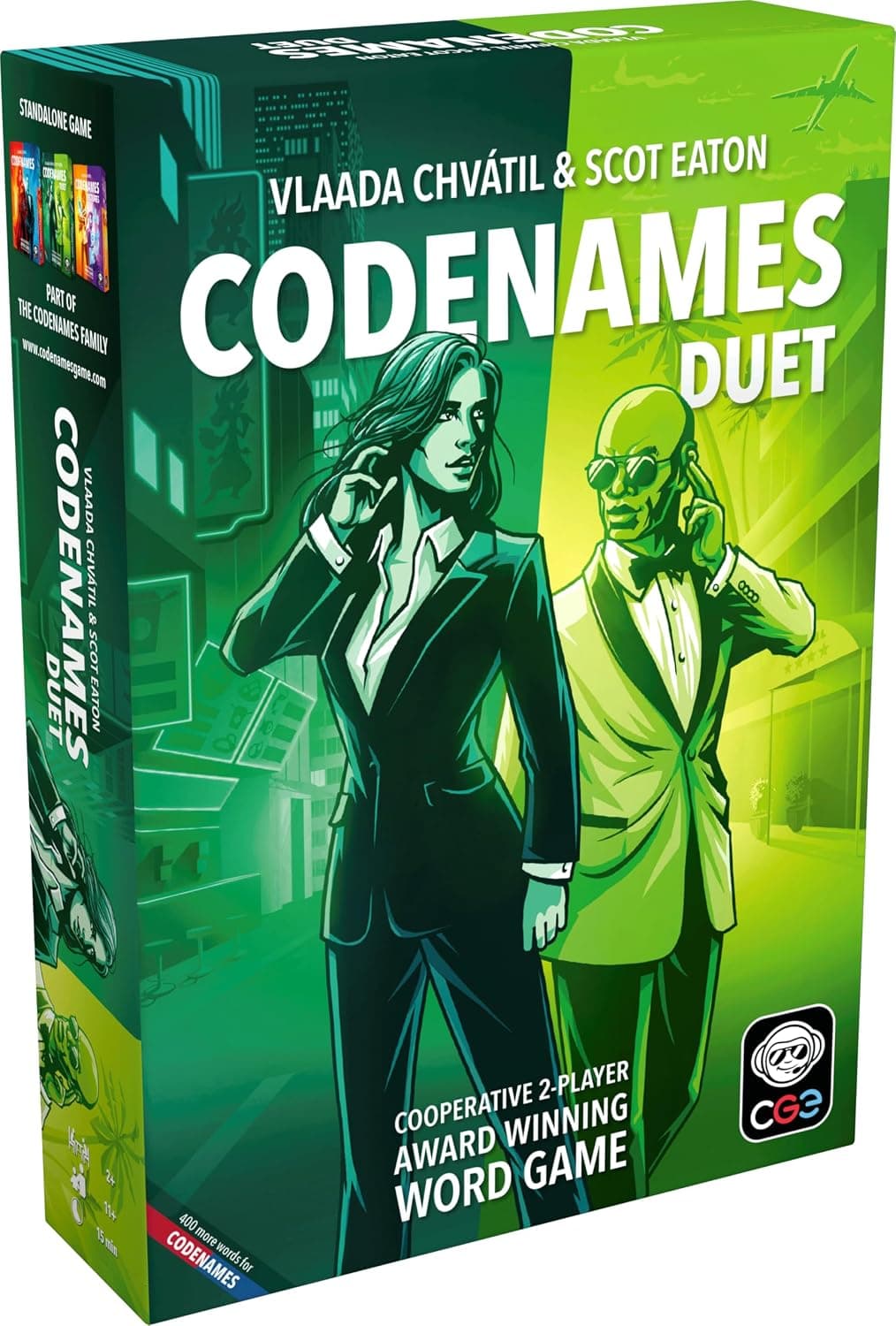
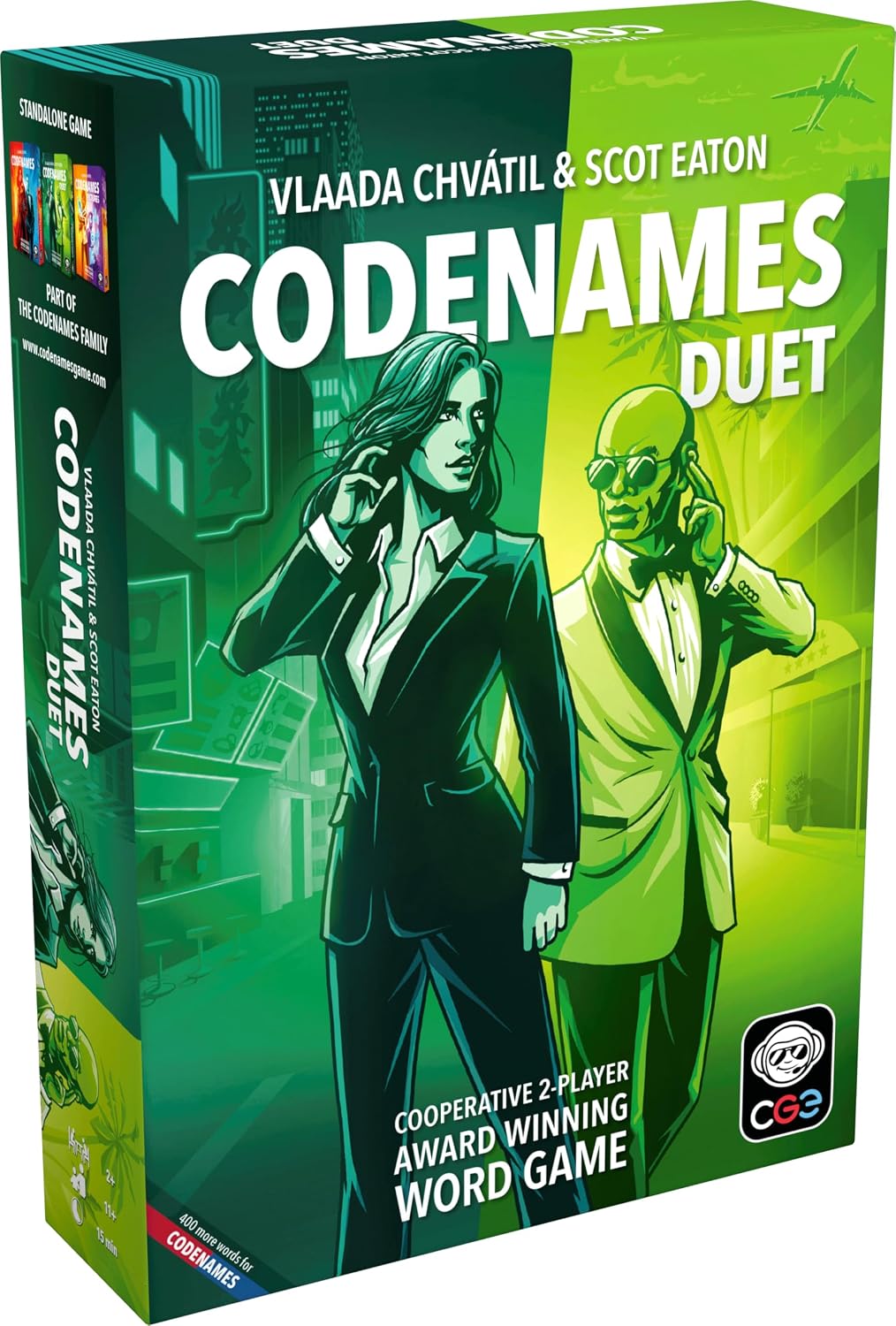
Designed by Vlaada Chvátil, Czech Games Edition Codenames has maintained its status as a staple for a reason: it scales almost infinitely without adding complexity. While the box officially lists 2 to 8 players, it effortlessly supports ten or twelve players split into two opposing teams (Red vs. Blue).
How It Works
Twenty-five word cards are laid out in a 5x5 grid. Each team elects a "Spymaster." Both Spymasters look at a shared key card showing which words belong to Red, which belong to Blue, which are innocent bystanders, and which single card is the dreaded "Assassin." The Spymaster must give a one-word clue followed by a number (for example, "River, 2"), aiming to link multiple friendly words on the grid while steering their teammates clear of the opponent's agents and the instant-loss Assassin card.
Why It Works for Teens to Grandparents
Codenames avoids modern internet slang and niche trivia. The vocabulary consists of simple, universal nouns and concepts (like Apple, Berlin, Trunk, or Bark). The game is won or lost on lateral thinking and linguistic associations, meaning a 14-year-old and a 70-year-old stand on completely equal footing. In fact, mixed teams often excel because they bridge different reference points when deciphering a clue.
The Trade-offs
The only friction point is "Spymaster paralysis." If a player overthinks their clue, the rest of the table can sit waiting in silence for two or three minutes. To keep energy high, pick confident clue-givers first or introduce an informal sand timer rule.
2. CMYK Wavelength – The Ultimate Empathy & Conversation Driver
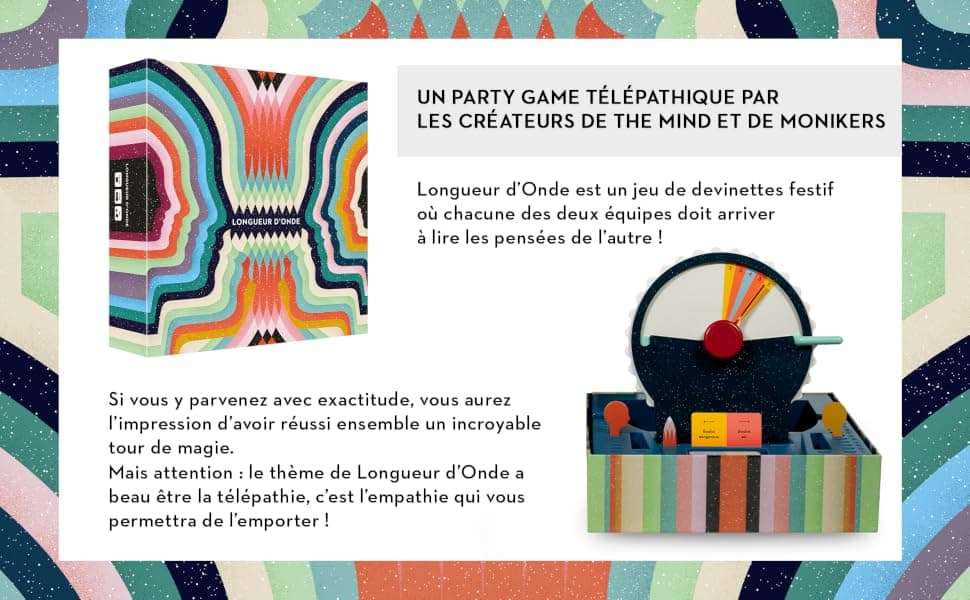
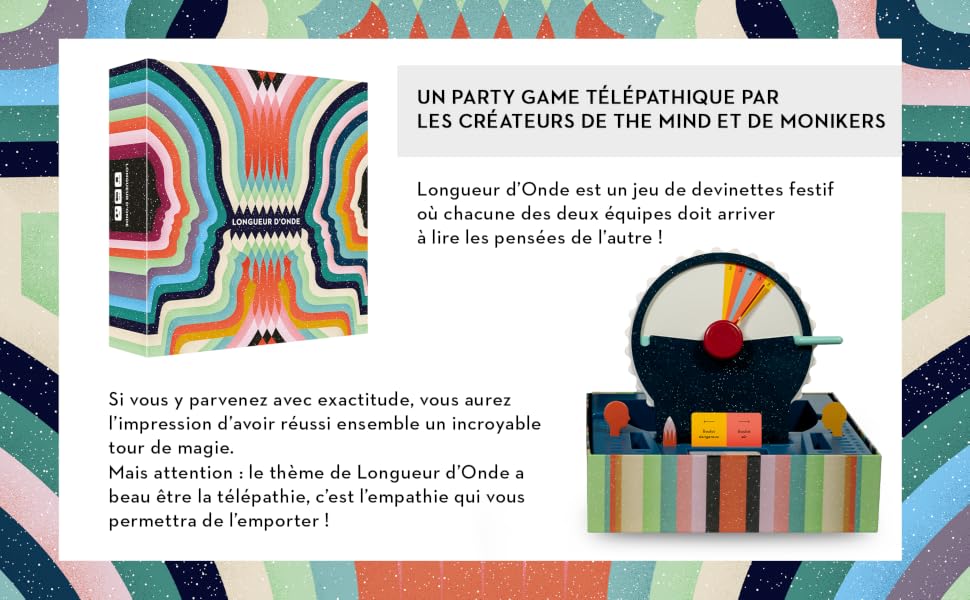
Created by Alex Hague, Justin Vickers, and Wolfgang Warsch, CMYK Wavelength is less about rigid point scoring and more about discovering how your family members perceive reality. It accommodates 2 to 12 players and features one of the most satisfying physical components in modern tabletop gaming: a large plastic dial with an adjustable red target wheel.
How It Works
A psychic player draws a spectrum card featuring two conceptual opposites (such as Hot – Cold, Underrated – Overrated, or Useless Superpower – Powerful Superpower). The psychic peeks at the hidden target location on the dial behind a screen, then gives a single clue that sits precisely where the dial points along that spectrum. The psychic shuts the screen, and their team must physically turn the dial to where they believe the target is hidden, sparking passionate debates across the table.
Why It Works for Teens to Grandparents
Wavelength thrives on subjective interpretation rather than objective knowledge. Arguments over whether "Die Hard" is a Christmas movie or where "Coffee" sits on the Tired – Wired spectrum naturally involve everyone in the room. Grandparents can offer generational perspective while teens debate modern cultural touchstones, creating genuine laughter without anyone feeling foolish.
The Trade-offs
Because the game leans heavily on organic conversation and subjective nuance, it demands a moderately expressive group. In an exceptionally shy or reticent gathering, discussions can stall if players refuse to vocalise their reasoning before turning the dial.
3. Big Potato The Chameleon – Fast-Paced Social Deduction Without Elimination
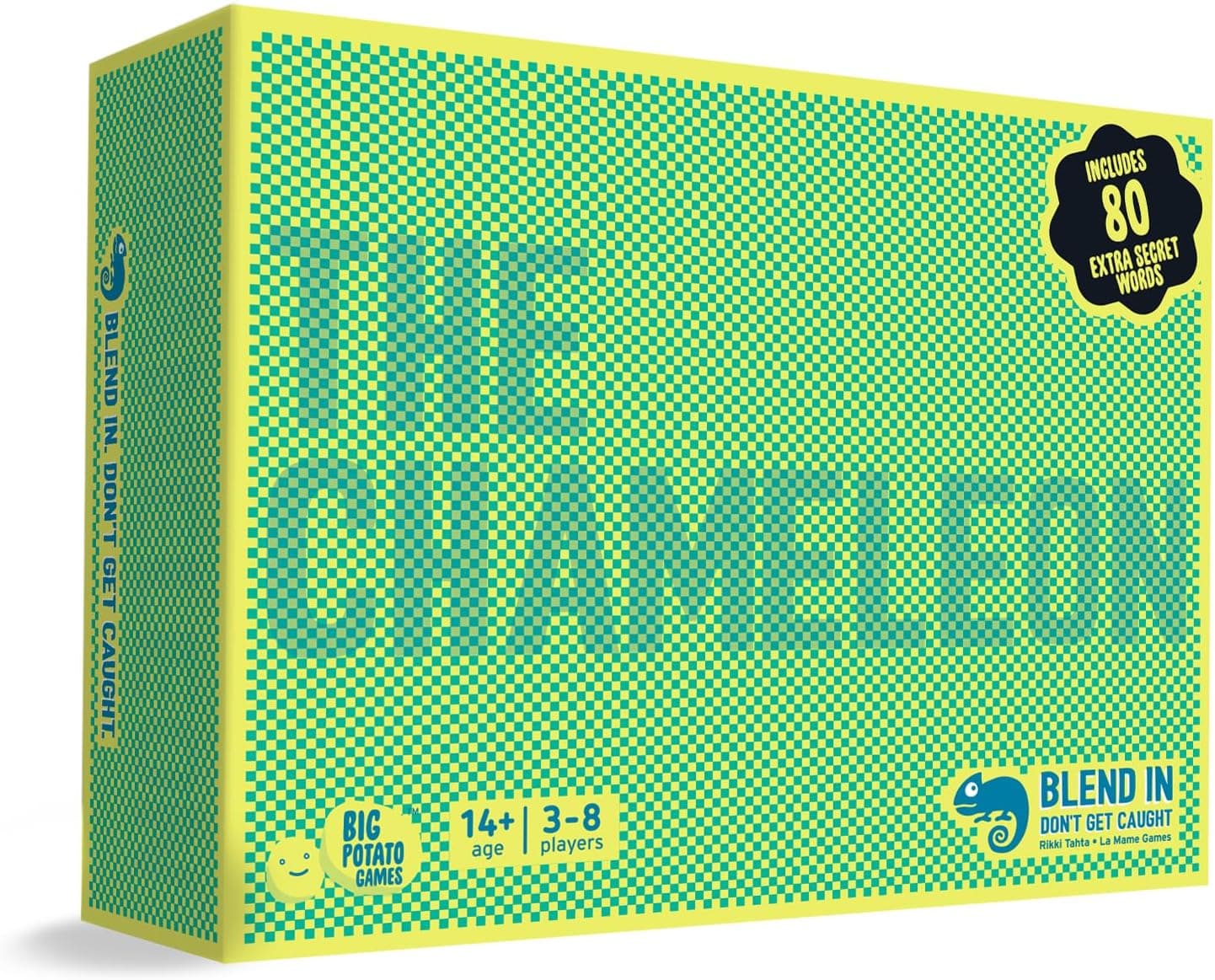
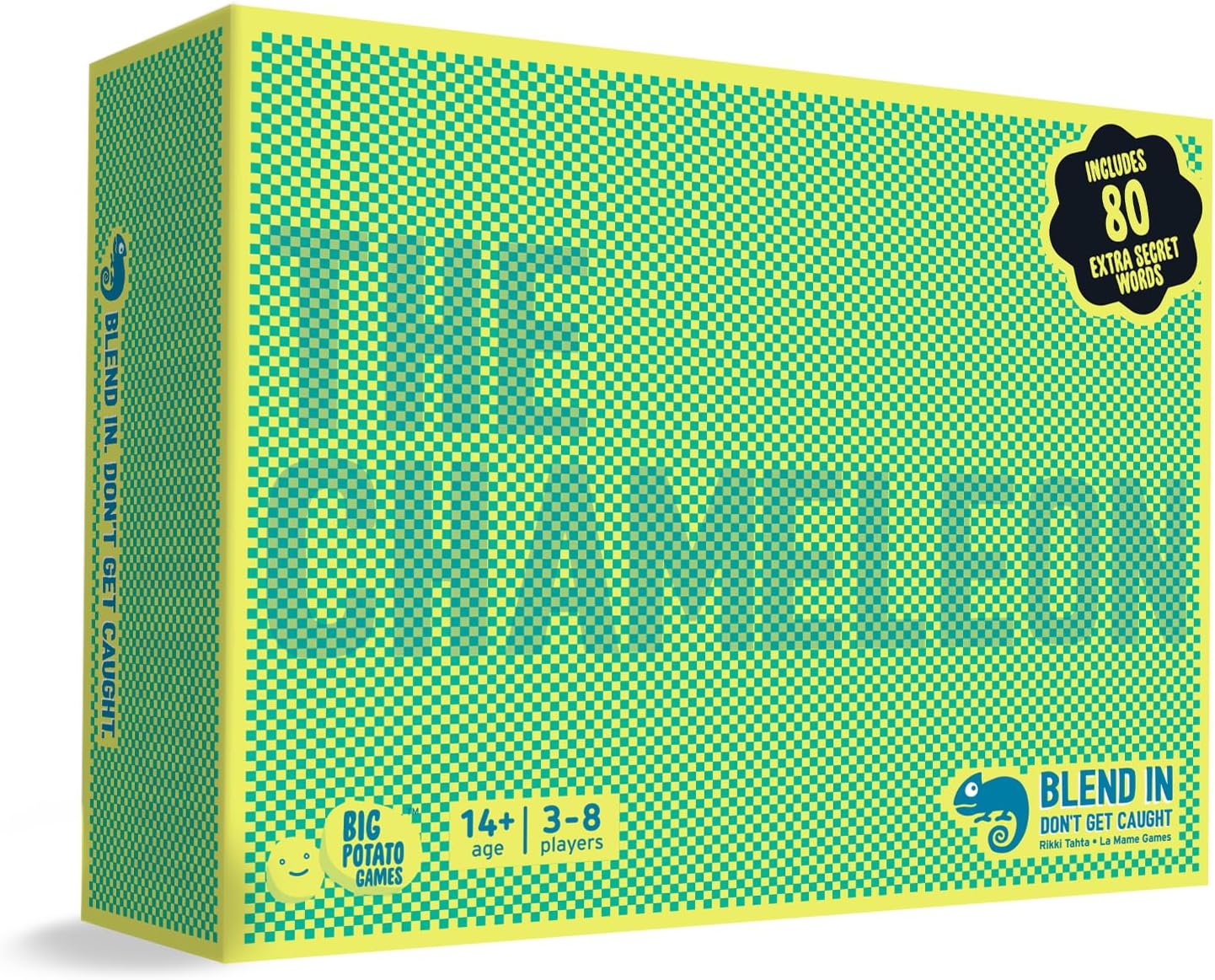
Social deduction games like Mafia or Werewolf often alienate casual players due to player elimination or aggressive interrogation. Big Potato The Chameleon strips away the cruelty and replaces it with a rapid-fire, accessible guessing mechanic that takes 60 seconds to teach and 15 minutes to play.
How It Works
Everyone around the table is handed a secret card. A pair of dice is rolled, pointing to one specific secret word on a shared topic card (such as Musical Instruments or Animals). Everyone knows the word except one player: the Chameleon. Each player in turn must say exactly one word related to the secret topic to prove they know it, but without being so obvious that the Chameleon figures out what the word is. Finally, the group debates and votes on who they believe the Chameleon is.
Why It Works for Teens to Grandparents
With an 8-player ceiling, it fits medium-to-large gatherings neatly. There are no convoluted roles or secret abilities to remember. The tension is lighthearted, and rounds are so brief that even if someone gets caught instantly, a fresh round begins two minutes later with someone else in the hot seat.
The Trade-offs
The base game contains a finite number of topic cards. While replayability is high because the dynamics change with every group, dedicated groups will eventually want fresh cards, making an expansion or the Chameleon Booster Pack a sensible future addition.
4. Gamewright Sushi Go Party! – Accessible Card Drafting with Zero Downtime
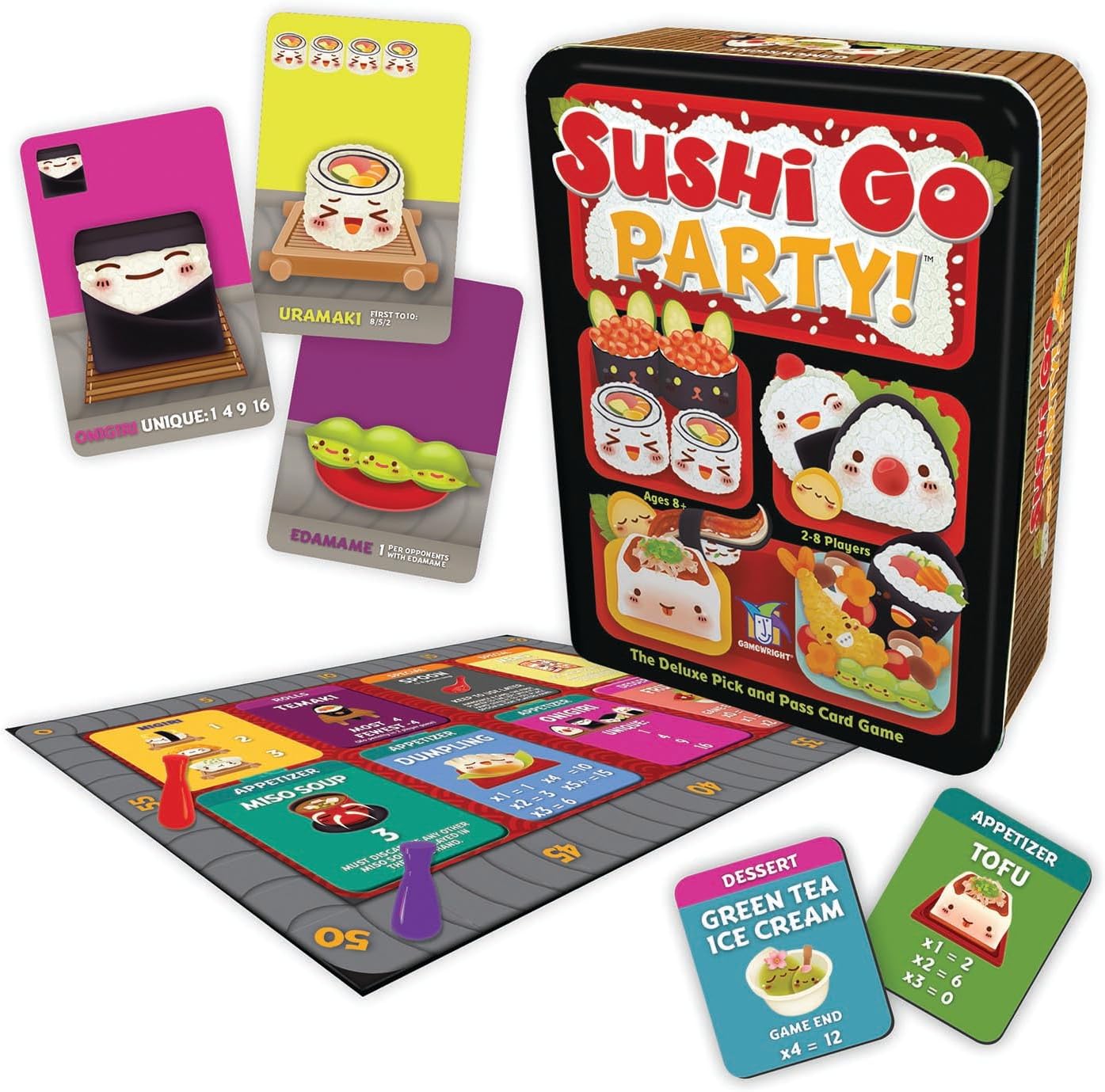
For groups who want tactile cards and light strategy rather than pure wordplay, Gamewright Sushi Go Party! represents the pinnacle of accessible set collection. It expands the original 5-player game to an 8-player format with a modular menu board and charming artwork.
How It Works
Players are dealt a hand of cards, choose one card to keep face down in front of them, reveal their picks simultaneously, and pass the remaining hand to the player on their left. Over three rounds, players score points by gathering combinations of sushi dishes (such as full sets of Sashimi, majority Maki rolls, or high-value Tempura pairs).
Why It Works for Teens to Grandparents
The simultaneous "pick-and-pass" mechanic completely eliminates player downtime. Nobody is left waiting for three other people to take their turns. The cards feature clean iconography and simple scoring conditions, reinforcing basic probability, set building, and spatial pattern recognition without requiring complex mathematical arithmetic.
The Trade-offs
Card drafting requires a decent amount of table space so everyone can clearly see their growing collection of scored dishes. Furthermore, shuffling the large 181-card deck between custom menu setups requires a couple of minutes of organisational prep before play begins.
Key Buying Factors for Multigenerational Party Games
1. Elimination vs. Continuous Play
Never choose a game with player elimination for family events. If Grandma or a teenager gets eliminated in round one and has to sit quietly for forty minutes watching others have fun, they will disengage from the entire evening. All four games recommended here keep every participant active from the opening turn to the final scoring phase.
2. Subjective Clues vs. Fact-Based Trivia
Factual trivia creates knowledge hierarchies that make younger players feel uneducated and older players feel out of touch. Games centered on word association (Czech Games Edition Codenames) or spectrum estimates (CMYK Wavelength) value emotional intelligence, lateral thinking, and table talk over static textbook facts.
3. The "Third-Drink" Rule of Complexity
A good rule of thumb for family gatherings: if a rule cannot be remembered after a slice of cake or a glass of wine, it is too complex for a holiday gathering. Look for games where the core mechanism can be demonstrated in a single practice turn lasting under sixty seconds.
Alternatives to Consider
If your gathering exceeds 8 players but your group prefers quick-fire bluffing over word grids, CMYK Wavelength remains the strongest large-format option up to 12 players. Conversely, if you have a slightly smaller group of 4 to 6 players who prefer fast card-shedding and tactical passing, sticking with Gamewright Sushi Go Party! delivers unmatched pacing and visual appeal.
Final Verdict
While every game featured here successfully solves the mixed-age friction problem, Czech Games Edition Codenames remains our top overall recommendation. Its combination of pocket-friendly pricing, near-infinite replay value, and zero setup friction ensures it will hit the table at every family gathering for years to come.