
As an Amazon Associate I earn from qualifying purchases. This page contains affiliate links, and I may earn a commission at no extra cost to you.
The Multi-Generational Game Night Problem
Planning a gathering that bridges the gap between thirteen-year-olds and sixty-year-olds is notoriously tricky. Pick something too simple, and the adults drift off to check sports scores on their phones. Pick a dense hobby board game with twenty pages of rulebook exceptions, and the teenagers zone out before the first round finishes. Word deduction games hit the sweet spot: they require zero dexterity, involve no fiddly maths, and reward lateral thinking over trivia recall.
For years, team-based deduction has been dominated by two standout titles: Czech Games Edition Codenames and Le Scorpion Masqué Decrypto. Both live comfortably in the sub-£25 price bracket, both promise rapid thirty-minute play sessions, and both turn everyday vocabulary into tense espionage. Yet despite sharing shelf space in board game cafes and Amazon carts across the UK, they play like entirely different beasts at the kitchen table.
One game relies on sweeping, open-grid associations where a single clue must tether three or four public cards together. The other operates like an actual Cold War espionage unit, tasking players with intercepting encrypted numerical codes over consecutive rounds. Below, we break down how both titles handle downtime, teenage-to-adult balance, and table scaling, alongside three alternative deduction and social party games worth considering for your next weekend gathering.
Quick Comparison: Family Deduction Games
Before diving into individual mechanics, this side-by-side overview shows how the top options stack up across player counts, target age bands, and group dynamics.
| Game | Player Count | Best Group Size | Downtime Level | Price Band | Amazon |
|---|---|---|---|---|---|
| Le Scorpion Masqué Decrypto | 3–8 players | 4–6 players | Near zero | Budget (£15–£25) | See it on Amazon |
| Czech Games Edition Codenames | 2–8+ players | 6–8 players | Moderate to high | Budget (£15–£25) | See it on Amazon |
| CMYK Wavelength | 2–12 players | 6–10 players | Low | Mid-range (£30–£40) | See it on Amazon |
| Big Potato Herd Mentality | 4–20+ players | 6–12 players | None (simultaneous) | Budget (£15–£25) | See it on Amazon |
| Bezier Games One Night Ultimate Werewolf | 3–10 players | 5–8 players | Zero (timed 5 min) | Budget (£15–£25) | See it on Amazon |
1. Le Scorpion Masqué Decrypto: The Interception Masterpiece
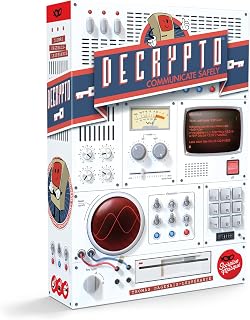
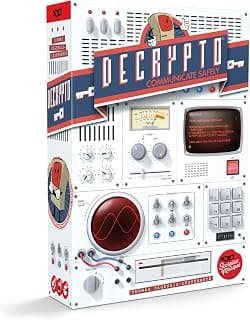
If your biggest pet peeve during party games is sitting quietly while one person agonises over a turn, Le Scorpion Masqué Decrypto is the immediate answer. Designed by Thomas Dagenais-Lespérance and published by Le Scorpion Masqué, this game flips conventional deduction on its head. Instead of guessing public words, two competing teams sit behind physical communication screens, each trying to communicate a secret three-digit numeric code to their teammates without the opposing team cracking their cipher.
Here is the mechanical brilliance: each team has four permanent keyword slots (numbered 1, 2, 3, and 4) hidden behind plastic red-filter decoding screens that conceal the text using vintage-style anaglyph effects. In round one, your active encryptor might draw a card showing the code "2-4-1". If your slot 2 is "Apple", slot 4 is "London", and slot 1 is "Ocean", you write down three one-word clues on your team sheet: "Orchard", "Big Ben", and "Pacific". Your teammates read the clues and easily map them to 2, 4, and 1.
However, the opposing team writes down those exact same clues on their interception sheet. By round three or four, the opponents have heard three distinct clues pointing to slot 2 ("Orchard", "Cider", "Granny Smith"). Even though they have never seen your secret card, they now deduce that slot 2 is fruit-related. If they correctly intercept two codes before you intercept two of theirs, they win the game outright.
Why Decrypto Excels for Mixed Generations
Teenagers frequently possess pop culture references, slang, and musical knowledge that older family members do not share. In standard word games, this can create friction or generational divides. In Decrypto, that gap becomes a strategic asset. An encryptor can tailor clues specifically to their teammates' niche shared experiences. A reference to a secondary school teacher, an obscure video game, or a recent holiday memory can be impossible for the other team to decode, provided at least one teammate catches the drift.
Furthermore, Decrypto boasts essentially zero downtime. When the opposing team is taking their turn, your team is not idly staring at the ceiling; you are actively hunched over your interception pad, scrutinising every word their encryptor uttered, comparing it to historical clues from round one, and attempting an intercept. The psychological tension never drops across its thirty-minute running time.
Drawbacks to Keep in Mind
The teaching hurdle is Decrypto's sole real flaw. Explaining the distinction between guessing the code (the numbers) versus guessing the keywords (the secret words) trips up first-time players almost without fail. The rulebook is clean and concise, but you must play through a sample round before older relatives or younger teens fully grasp the flow. It also consumes paper score sheets; while generous double-sided pads are included in the box, heavy households will eventually need to photocopy or laminate sheets for dry-wipe pens.
2. Czech Games Edition Codenames: The Broad-Appeal Classic
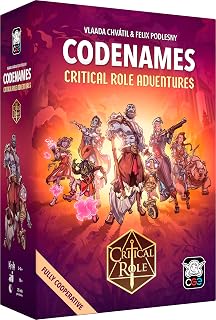
Few tabletop games have achieved the cultural ubiquity of Codenames. The original design by Vlaada Chvátil earned the prestigious Spiel des Jahres award, and it remains a fixture of family gatherings worldwide. Whether playing standard editions or campaign-oriented releases like Czech Games Edition Codenames, the underlying premise is effortlessly simple: two rival spymasters know the secret identities of agents on a table grid, and they must offer one-word clues paired with a number to direct their team to the correct cards while dodging the instant-loss assassin.
The sheer accessibility of the concept is unmatched. You can explain the basic rules of Codenames in sixty seconds flat. A grid of words (or character cards, depending on the edition) sits between two teams. The spymaster glances at their secret key grid, notices that "Bark" and "Trunk" are both friendly agents, and says: "Tree: Two". The team discusses possibilities, touches a card, and either rejoices or groans when they reveal a neutral bystander or an enemy agent.
Where Codenames Struggles: The Spymaster Silence Trap
While Codenames is easier to teach than Decrypto, it suffers from a well-documented pacing flaw known across the hobby as 'analysis paralysis'. When a spymaster is confronted with twenty-five disparate words and needs to link three disparate nouns together without touching the assassin card, the table frequently falls into complete, deafening silence. For two, three, or even four minutes, six players might sit drinking tea in silence while one poor relative sweats over how to link "Shakespeare" and "Submarine".
For restless teenagers who expect quick feedback loops, this dead air can ruin the momentum of game night. Some editions include an hourglass sand timer to enforce pace, but rushing a spymaster often leads to illegal clues or careless blunders that hand the victory over prematurely.
Parity and Vocabulary Pitfalls
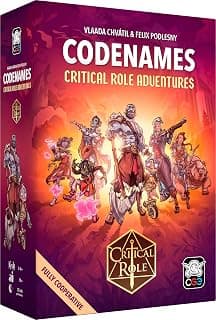
In standard Codenames grids, adult vocabulary advantages can occasionally isolate younger players. When words like "Compound", "Stock", or "Draft" appear, adults familiar with financial, military, or legal definitions can craft clever multifaceted clues that thirteen-year-olds might misunderstand. The newer co-operative and mission-based editions of Czech Games Edition Codenames help alleviate some of this competitive sting by shifting players onto a unified side with defined character abilities, leveling up, and branching missions, making it far more forgiving for mixed ages who dislike cut-throat scoring.
Head-to-Head: Codenames vs Decrypto Breakdown
To help you decide which box belongs in your cupboard, let us examine how both games perform across four vital criteria for family gatherings.
1. Downtime and Table Engagement
Decrypto takes this category decisively. Because both teams take turns encrypting while simultaneously trying to crack the other team's cipher, no one ever disengages. In Codenames, when Team Red is deliberating over their clues, Team Blue has no active mechanical duty other than hoping Team Red makes an error. If your group includes players with short attention spans, Decrypto keeps every brain humming continuously.
2. Ease of Explanation (The Grandparent Test)
Codenames wins handily here. You can lay the cards out on a dining table, hand the key card to a spymaster, and start playing within two minutes. Decrypto requires you to explain the red filter screens, the four fixed positions, the difference between numbers and words, and the intercept mechanic. If your family night includes players who despise listening to rules explanations, Codenames will generate far less initial resistance.
3. The "Aha!" Factor and Cleverness
Both games offer brilliant eureka moments, but they feel fundamentally distinct. Codenames delivers sudden bursts of glory when a spymaster connects four unrelated nouns with a daring clue like "Carnival: 4" and the field operatives nail every single one. Decrypto delivers a slower, more rewarding burn. Successfully predicting the other team's three-digit code on turn four because you deduced their fourth keyword must be "Electricity" makes everyone at the table feel like a bona fide Bletchley Park cryptographer.
4. Player Count Flexibility
Codenames scales comfortably from four to eight players, and can technically accommodate ten or twelve if people are willing to chime in from the edges of the room. Decrypto is strictly built for four to eight players. Playing Decrypto with three is technically supported via an artificial variant, but it lacks the magic of two full competing squads. For groups of four to six, Decrypto is superior; for massive groups spilling onto extra sofas, Codenames handles the overflow better.
Alternative Party Games for Mixed-Age Gatherings
If neither Codenames nor Decrypto sounds like the exact match for your upcoming weekend, three other established titles on Amazon UK offer distinct angles on deduction, party dynamics, and social interaction.
CMYK Wavelength: The Analogue Spectrum Sensation
If you want the lateral thinking of Codenames without the silent vocabulary stress, CMYK Wavelength is one of the finest social guessing games produced in the last decade. Designed by Alex Hague, Justin Vickers, and Wolfgang Warsch, Wavelength revolves around a physical plastic dial inside a bespoke display wheel.
One player (the Psychic) looks at a hidden target zone on a spectrum between two conceptual opposites—such as "Hot to Cold", "Guilty Pleasure to Pure Joy", or "Rough to Smooth". The Psychic must give a single clue that falls precisely where the hidden wedge lies. For example, on a scale between "Underrated to Overrated", if the target is slightly to the right of center, the Psychic might say "The Beatles". The rest of the team must discuss, debate, and turn the mechanical dial to where they believe that clue sits on the spectrum.
Why does it work so well for families? Because the debate is the game. When a teenager and a parent argue about whether toasted crumpets are more or less "comfort food" than chicken noodle soup, the entire room lights up. It scales effortlessly up to twelve players and eliminates vocabulary intimidation entirely.

Big Potato Herd Mentality: The Ultimate Low-Stress Icebreaker
If your gathering includes children younger than twelve or relatives who freeze up the moment word association becomes competitive, Big Potato Herd Mentality removes the intellectual pressure completely. Designed and published by UK-based Big Potato Games, the objective is literally to blend into the herd.
A question is flipped from the deck—such as "What is the best flavour of crisps?" or "Name a fruit you cannot peel with your bare hands." Every player writes down their answer secretly on a pad. There is no "correct" answer; the goal is simply to write what you think everyone else will write. If your answer is in the majority, you earn a cow token. But if your answer is the odd one out, you are saddled with the squishy Pink Cow of Doom, which prevents you from winning the game until someone else gives an even weirder answer.
Herd Mentality supports four to twenty or more players, takes thirty seconds to explain, and guarantees hearty laughter across three generations. It lacks the deep deduction of Decrypto, but as an energetic warm-up or post-dinner laugh, it is virtually foolproof.

Bezier Games One Night Ultimate Werewolf: Pure Five-Minute Bluffing
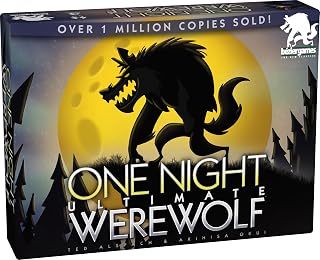
For groups that prefer deduction driven by social deception and psychological bluffing rather than word puzzles, Bezier Games One Night Ultimate Werewolf provides lightning-fast chaos. Published by Bezier Games, this title strips away the painful player elimination and drawn-out moderator narrations of traditional Mafia or Werewolf games.
Every player is dealt a secret role tile—a Werewolf, Seer, Troublemaker, Robber, or Villager—each possessing a distinct nocturnal power. A free companion smartphone app guides the room through a brief night phase during which players close their eyes while certain roles wake up to peek at cards or secretly swap tiles between players. When morning breaks, everyone opens their eyes, and a five-minute timer begins. Players have exactly three hundred seconds to interrogate one another, reconstruct what happened in the dark, and vote on who to eliminate.
Because roles can change in the dark without a player's knowledge, someone who started the night as a loyal Villager might have been swapped into a Werewolf by the Troublemaker, leading to wild accusations and hilarious table drama. It plays in ten minutes flat, making it exceptionally easy to squeeze in three or four consecutive rounds before dessert.
Buyer’s Guide: What to Look for in a Family Deduction Game
When selecting a deduction game for a mixed gathering, do not simply buy whatever sits at the top of an arbitrary bestseller list. Consider how specific game mechanics interact with your living room layout and family personalities.
1. Elimination Mechanics Are Obsolete
Decades ago, deduction games routinely knocked losing players out of the match (think classic Cluedo or early 1990s Werewolf variants). In a modern family setting, player elimination is an absolute non-starter. Sitting out for forty minutes while your relatives finish a match guarantees boredom. Every game recommended here—including Le Scorpion Masqué Decrypto, Czech Games Edition Codenames, and Bezier Games One Night Ultimate Werewolf—ensures every participant remains active from the opening turn until the final score tally.
2. The Skill Floor vs. The Knowledge Gap
Be honest about the literacy and vocabulary confidence of everyone around the table. Games that lean heavily on lexical range can accidentally marginalise younger teenagers or non-native English speakers. If you suspect complex wordplay will make someone feel self-conscious, steer towards concept-based spectrum games like CMYK Wavelength or majority-thinking party games like Big Potato Herd Mentality, where emotional intuition matters far more than an extensive mental dictionary.
3. Physical Footprint and Coffee Table Real Estate
Codenames requires a neat five-by-five grid of cards laid out across a central surface, plus space for clue cards and timers. Everyone must be able to read the orientation of the text from their seats. Decrypto, conversely, requires very little central table space: each team simply needs room on their laps or side tables for their team screen and writing pad. If your family night takes place around a cluttered sitting room coffee table with mugs and snack bowls, Decrypto’s compact profile is substantially more convenient.
The Final Verdict
If you are choosing strictly between the two heavyweight deduction titles for a gathering of teenagers and adults, Le Scorpion Masqué Decrypto earns our top recommendation. While Codenames remains the undisputed gateway king for sheer simplicity, Decrypto’s complete elimination of downtime, clever double-blind code interception, and tactile retro-decoder components make it a significantly more gripping thirty-minute experience for competitive minds aged twelve and up.
If you anticipate rulebook fatigue or want an experience that accommodates younger kids alongside grandparents without any competitive friction, grab Big Potato Herd Mentality as a foolproof crowd-pleaser, or turn the dial on CMYK Wavelength for the best philosophical kitchen-table debates you will have all year.