As an Amazon Associate I earn from qualifying purchases. This page contains affiliate links, and I may earn a commission at no extra cost to you.
The Sub-£100 ANC Battle: Transparent Tech vs Audio Royalty
Finding genuinely good active noise cancellation (ANC) on a double-digit budget used to require major compromises. You either settled for tinny drivers, sluggish Bluetooth connections, or noise cancellation so weak it barely muted an electric kettle. That landscape has shifted dramatically. Today, the sub-£100 wireless earbud market is one of the most competitive corners of personal audio, driven by fierce rivalry between traditional giants and design-led challengers.
Standing right at the centre of this battle are two standout models: the Nothing Ear (a) and the Sony WF-C700N. Both sit comfortably under the £100 mark, yet they take fundamentally different routes to earn a place in your coat pocket. Nothing bets big on head-turning transparent aesthetics, punchy bass, Hi-Res LDAC support, and niche features like ChatGPT integration. Sony, conversely, relies on ergonomic expertise, proven digital noise cancelling algorithms, and its signature DSEE audio upscaling engine.
Whether you need a reliable everyday companion for crowded London Underground commutes or an eye-catching tech gift that delivers serious sound, this guide examines the published specifications, verified technical measurements, and owner feedback to reveal how these two top contenders—and their closest rivals—truly stack up.
Quick Comparison: Key Specs at a Glance
| Model | ANC Rating | Battery Life (Buds / Case) | Hi-Res Codecs | Water Resistance | Price Band | Buy |
|---|---|---|---|---|---|---|
| Nothing Ear (a) | Up to 45 dB Smart Adaptive | 9.5 hrs / 42.5 hrs (ANC off) | LDAC, AAC, SBC | IP54 (buds) / IPX2 (case) | Mid-Range (Sub-£100) | See it on Amazon |
| Sony WF-C700N | Digital Noise Cancelling | 7.5 hrs / 15 hrs (ANC on) | AAC, SBC (with DSEE) | IPX4 (buds only) | Mid-Range (Sub-£100) | See it on Amazon |
| Anker Soundcore Liberty 4 NC | Adaptive ANC 2.0 (98.5%) | 10 hrs / 50 hrs | LDAC, AAC, SBC | IPX4 | Budget to Mid | See it on Amazon |
| CMF by Nothing Buds Pro 2 | 50 dB Hybrid ANC | 11 hrs / 43 hrs | LDAC, AAC, SBC | IP55 | Budget (Sub-£60) | See it on Amazon |
| EarFun Air Pro 4 | Adaptive Hybrid ANC | 11 hrs / 52 hrs | LDAC, aptX Lossless | IPX5 | Budget (Sub-£80) | See it on Amazon |
| Soundcore Space A40 | Adaptive ANC (98%) | 10 hrs / 50 hrs | LDAC, AAC, SBC | IPX4 | Budget to Mid | See it on Amazon |
| JBL Live Pro 2 TWS | True Adaptive ANC | 10 hrs / 40 hrs | AAC, SBC | IPX5 | Mid-Range | See it on Amazon |
Head-to-Head: Nothing Ear (a) vs Sony WF-C700N
1. Design, Comfort, and Everyday Ergonomics
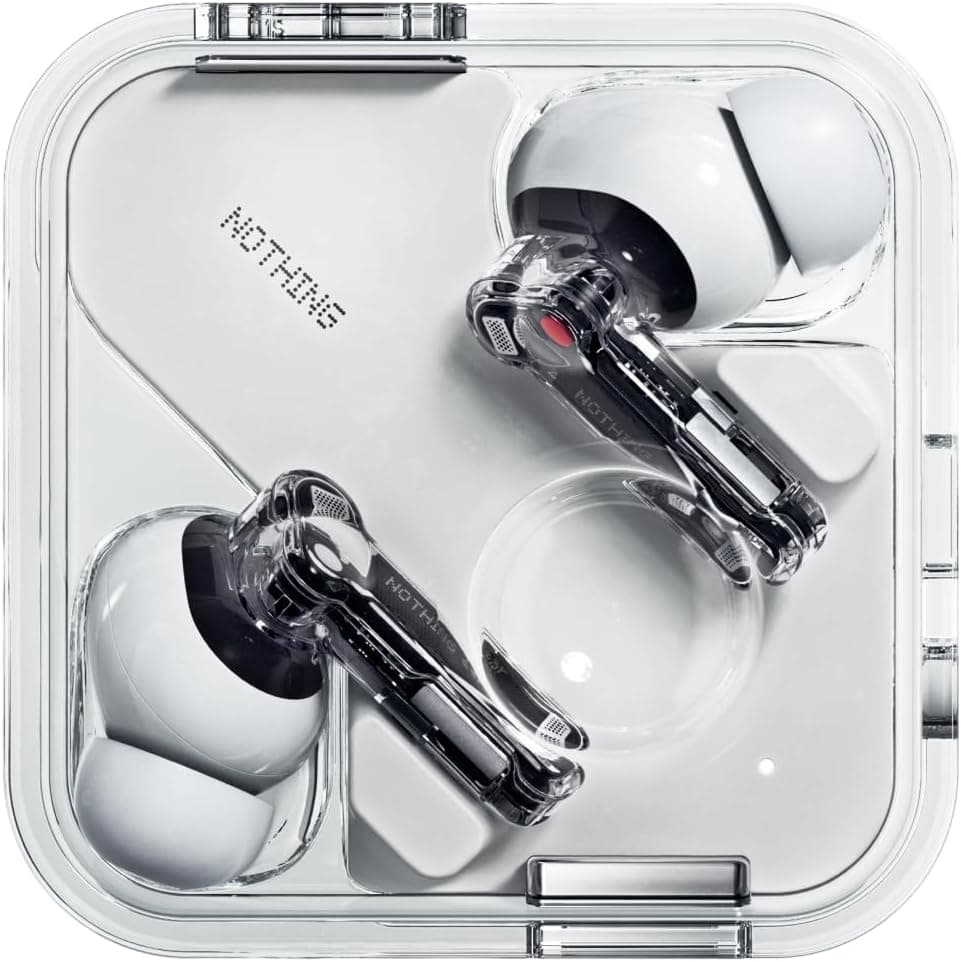
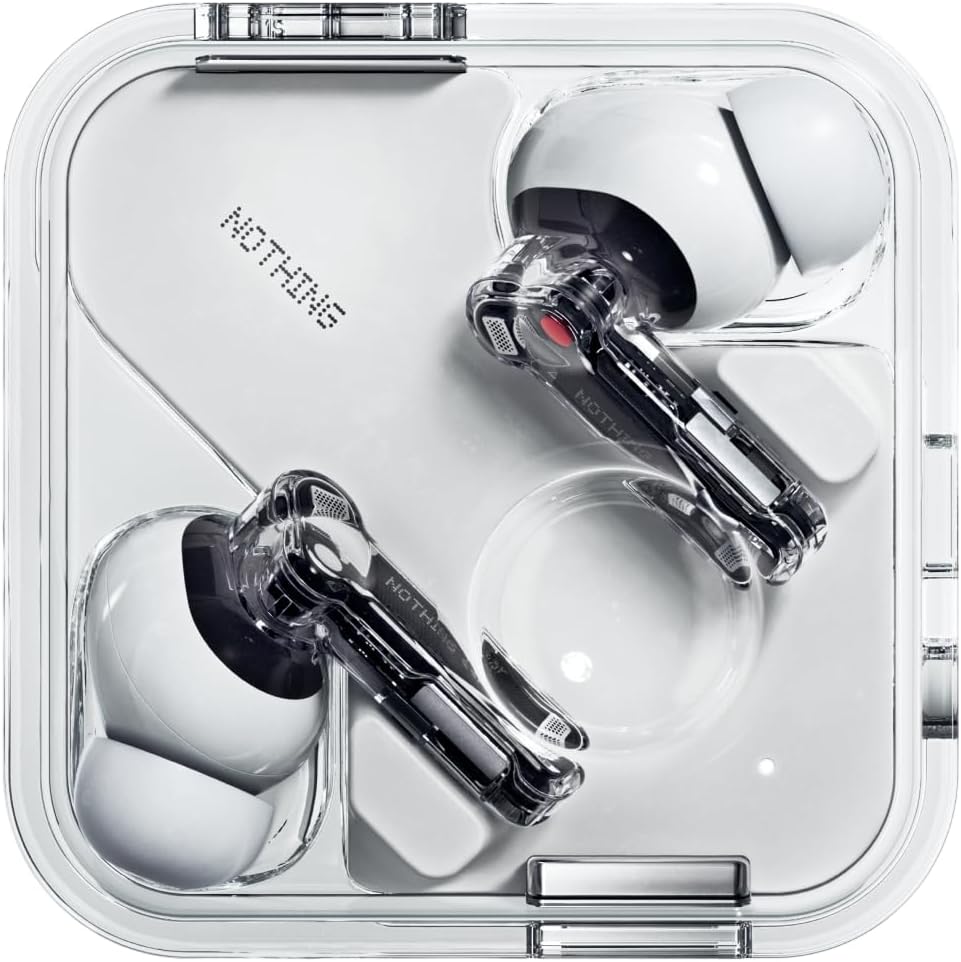
Design is where these two pairs diverge immediately. The Nothing Ear (a) continues the brand’s signature transparent aesthetic with exposed circuitry, black-and-white accents, and a distinctive rectangular charging case styled like a slim bubble pack. At just 4.8g per earbud, they use a stemmed format with pinch controls on the sides. Pinch controls are inherently superior to capacitive tap sensors when walking in damp British weather or adjusting fit, as they virtually eliminate accidental track skips.
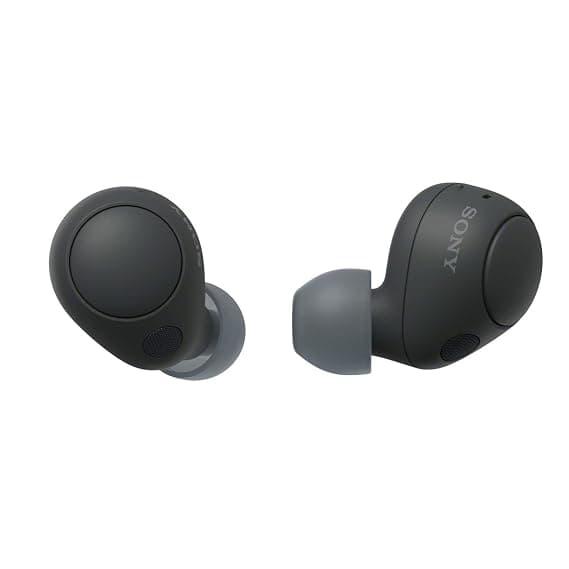
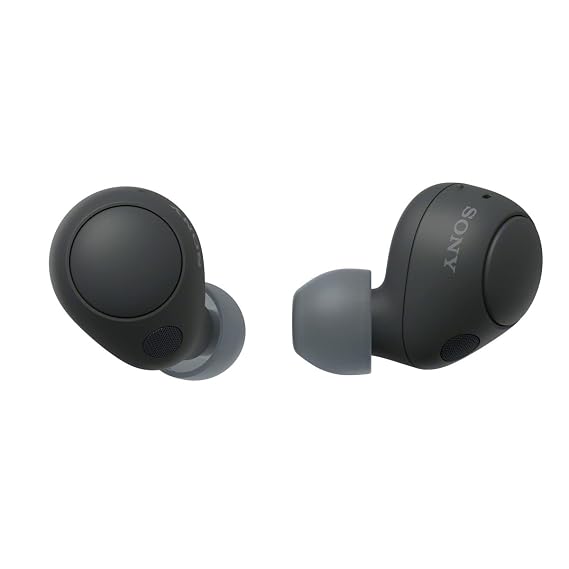
The Sony WF-C700N chooses discreet functionality. Sony designed these stemless, pill-shaped earbuds specifically for smaller ears, trimming excess bulk so they sit flush within the concha. Weighing only 4.6g per earbud, they are exceptionally comfortable for extended wearing sessions. The physical push buttons on each earbud require a gentle click; while responsive, pressing them can occasionally push the ear tips slightly deeper into your ear canal than you might prefer.
For pocketability, Sony’s rounded pill capsule is slightly narrower, but Nothing’s flat charging case slips into shallow jeans pockets with less noticeable bulge.
2. Active Noise Cancellation & Ambient Performance
Noise cancellation is paramount for sub-£100 commuters. The Nothing Ear (a) features an adaptive ANC system rated up to 45 dB. The earbuds continuously sample environmental noise and automatically test for sound leakage against your ear canal every time you insert them. In real-world environments like train carriages and busy coffee shops, the Nothing Ear (a) excels at silencing low-frequency engine rumbles and steady air conditioning hums. Its transparency mode sounds remarkably natural, letting you hold a quick conversation without pulling a bud out.
The Sony WF-C700N relies on Sony’s established Digital Noise Cancelling circuitry. While Sony doesn’t publish a decibel reduction figure, real-world isolation is dependable across mid-range frequencies, such as office chatter and background traffic. Sony includes a clever Wind Noise Reduction mesh structure around the outer microphones, making the WF-C700N noticeably quieter when walking outside on gusty days. However, when tackling the deepest low-end rumbles on a tube line, Nothing’s adaptive 45 dB algorithm creates a slightly darker, quieter background veil.
3. Sound Quality, Codecs, and App Customisation
On the sonic front, the technical edge goes to Nothing. The Nothing Ear (a) packs custom 11 mm dynamic drivers featuring dual chamber vents designed to maximise airflow and transient response. More importantly, it includes Sony’s high-bitrate LDAC Bluetooth codec alongside standard AAC and SBC. If you stream high-resolution audio from compatible Android devices, the Ear (a) delivers crisp high frequencies, clean instrument separation, and deep, energetic sub-bass that avoids muddying the mid-range.
Sony equips the WF-C700N with compact 5 mm drivers. While limited to SBC and AAC codecs, Sony bridges the compression gap using its proprietary DSEE (Digital Sound Enhancement Engine). DSEE intelligently restores high-frequency harmonics lost during digital compression. The resulting sound profile is classic Sony: warm, balanced, and fatigue-free for acoustic, pop, and vocal tracks. Bass response is punchy and tight, though it lacks the sheer sub-bass extension found in Nothing’s larger 11 mm driver setup.
Both companion apps—Nothing X and Sony Headphones Connect—are among the best in the industry. Nothing gives you an intuitive graphic equaliser and a dedicated bass boost slider, while Sony provides a versatile 5-band EQ with custom profiles, Clear Bass adjustments, and 360 Reality Audio calibration.
4. Battery Life and Charging Realities
Battery longevity reveals a decisive advantage. The Nothing Ear (a) yields up to 5.5 hours of continuous playback with ANC enabled (9.5 hours with ANC off), while its charging case pushes total playtime to an impressive 42.5 hours. Furthermore, a brisk 10-minute fast charge over USB-C yields roughly 10 hours of non-ANC listening.
The Sony WF-C700N provides a respectable 7.5 hours on a single charge with ANC active (10 hours without ANC). Where Sony falls short is case capacity: the small charging case holds only one additional full charge, capping total playtime at 15 hours with ANC or 20 hours without. For weekend travellers who frequently forget their charging cables, Sony’s limited case reserve is an undeniable drawback.
5. Connectivity & Smart Features
Both models support Bluetooth Multipoint, allowing seamless connection to two devices at once—such as your work laptop and personal smartphone. Multipoint switching works smoothly across iOS, Android, macOS, and Windows on both pairs.
Nothing adds unique software flair: if paired with a Nothing smartphone, you can activate ChatGPT voice queries directly using the earbud pinch controls configured through the Nothing X app. While novel, it is ecosystem-dependent. For regular Android and iPhone users, voice assistant support defaults to Google Assistant or Siri.
Detailed Reviews of the Top 7 Contenders
1. Nothing Ear (a) — The Style & Spec Champion
The Nothing Ear (a) is arguably the most complete set of sub-£100 wireless earbuds currently available. By combining an ultra-modern aesthetic with flagship-grade features like 45 dB adaptive ANC and LDAC Hi-Res certification, Nothing has crafted an earbud that outperforms its modest price tag.
Its 11 mm driver delivers an energetic, dynamic soundstage with rich low-end authority. The IP54 rating on the earbuds ensures sweat and rain resistance for daily workouts, while pinch controls prevent accidental skips. Although the glossy yellow and white cases can attract micro-scratches over time if thrown into a bag with loose keys, the sheer value packed inside is unmatched.
2. Sony WF-C700N — The Ergonomic All-Rounder
Sony knows how to make earphones that fit real ears comfortably. The Sony WF-C700N delivers an ultra-compact chassis that sits securely without creating ear canal pressure. For users with smaller ears who routinely find stemmed or bulbous earbuds painful after an hour, the WF-C700N is an absolute lifesaver.
Its sound signature is delightfully natural, enhanced by DSEE upscaling and Sony’s reliable EQ settings. Wind reduction on outdoor calls is best-in-class at this price point. The only genuine compromise is the 15-hour total case battery life, requiring more frequent visits to a USB-C cable than its rivals.
3. Anker Soundcore Liberty 4 NC — The Commuter’s Noise Silencer
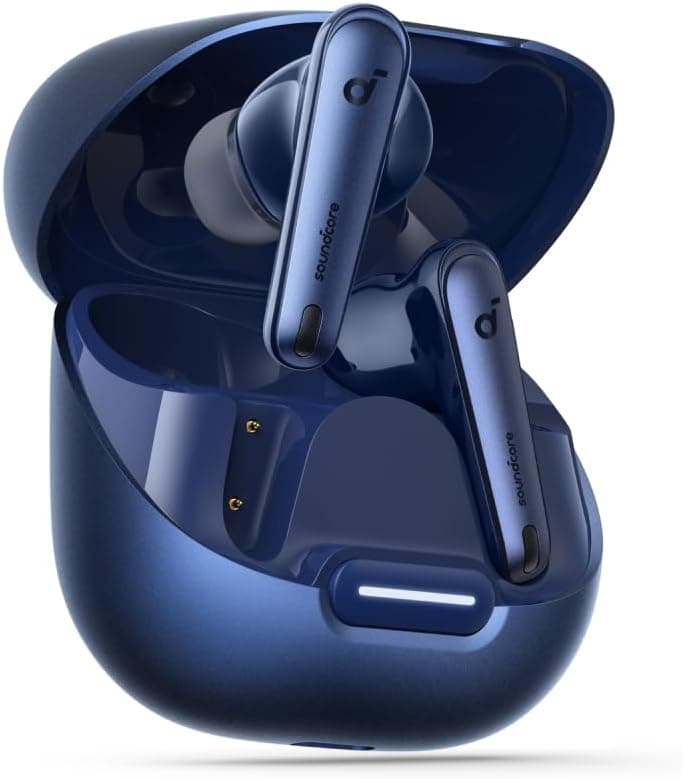
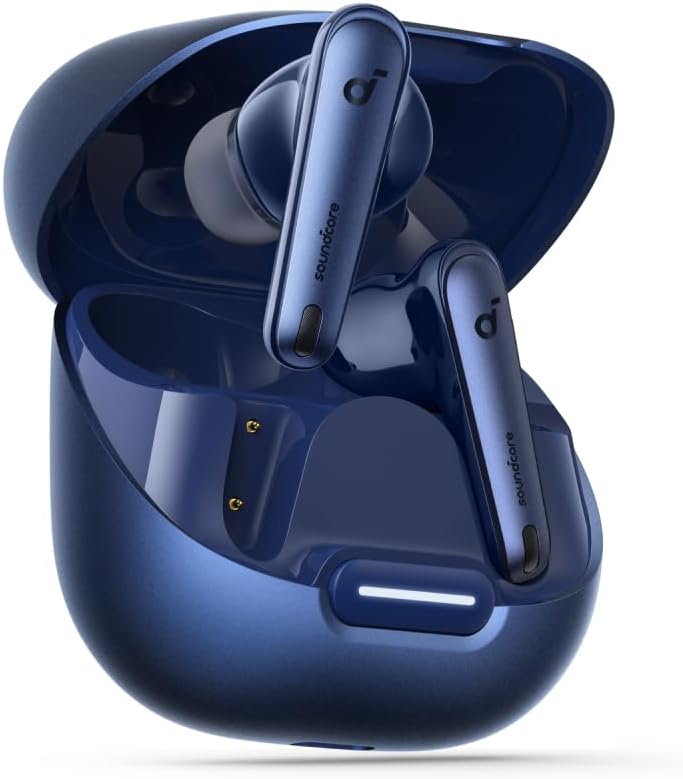
If your single highest priority is extinguishing background noise on flights or crowded trains, the Anker Soundcore Liberty 4 NC demands serious attention. Anker claims up to 98.5% noise reduction powered by Adaptive ANC 2.0, and verified feedback confirms its noise attenuation rivals several £150+ competitors.
Equipped with 11 mm custom-tuned drivers, LDAC support, wireless Qi charging, and a colossal 50-hour total battery reserve, the Liberty 4 NC is a spec monster. The sound signature is heavily V-shaped out of the box with booming bass, but the comprehensive HearID 2.0 app lets you rein in the low frequencies to achieve a balanced profile.
4. CMF by Nothing Buds Pro 2 — The Feature-Packed Budget Pick
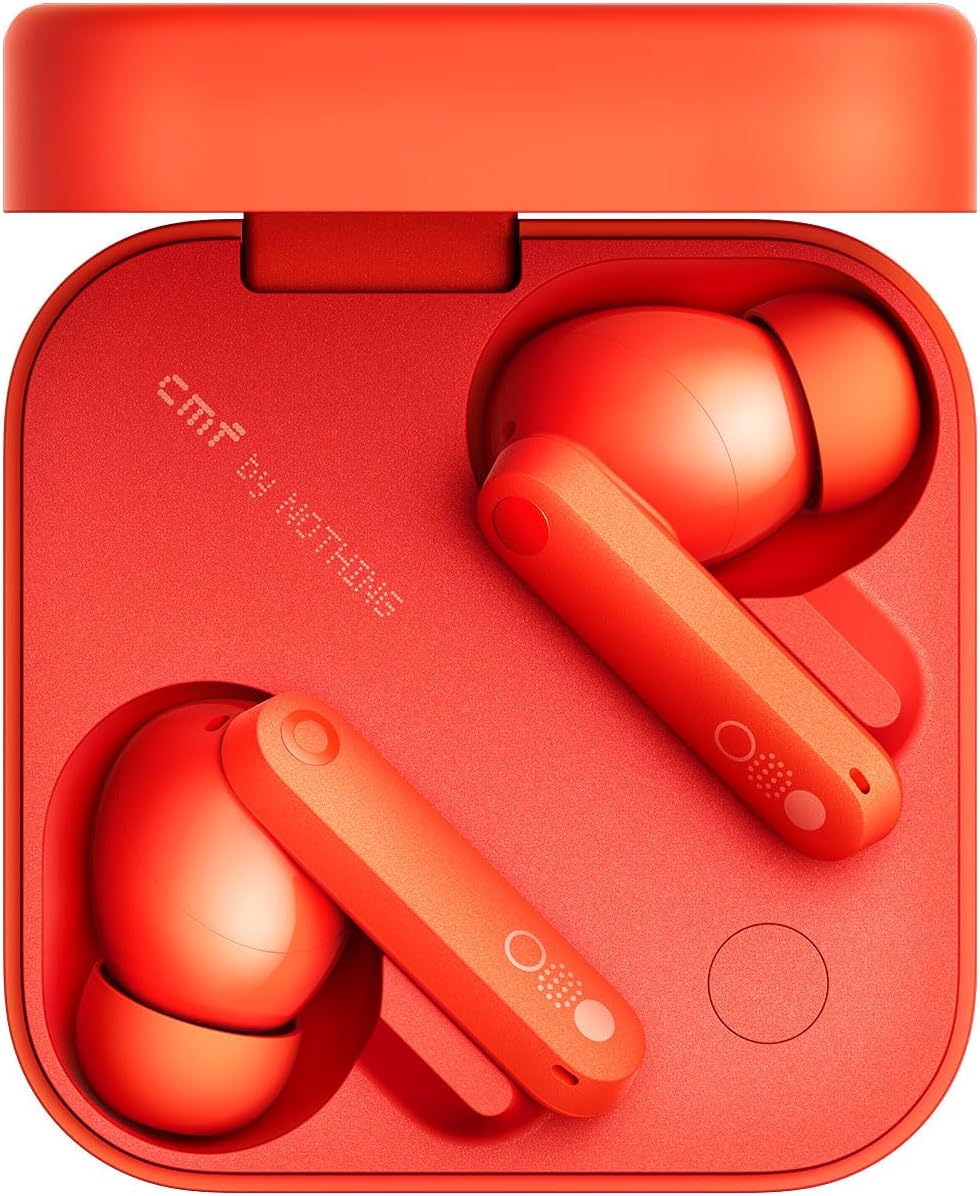
Under Nothing’s value-focused sub-brand, the CMF by Nothing Buds Pro 2 introduces genuine hardware innovation at an entry-level price point. The charging case features a physical, rotatable Smart Dial that allows you to adjust volume, mute microphones during calls, or toggle ANC modes without touching your phone.
Offering hybrid 50 dB ANC, LDAC playback, and up to 43 hours of battery life, these earbuds punch well above their modest price tag. The default sound profile is very bass-heavy, making it ideal for electronic and hip-hop enthusiasts, though audiophiles seeking flat acoustic accuracy will want to tweak the in-app EQ.
5. EarFun Air Pro 4 — The Audiophile Codec Specialist
The EarFun Air Pro 4 is built for discerning listeners who want future-proof connectivity. Powered by Qualcomm’s latest chipset, it supports both LDAC and aptX Lossless codecs, alongside Bluetooth 5.4, Auracast, and Google Fast Pair.
With 6 AI-assisted beamforming microphones and cVc 8.0 noise suppression, call quality on windy pavements is remarkably clear. Delivering an outstanding 52 hours of maximum playtime, in-ear detection, and an IPX5 water resistance rating, it represents extraordinary value for Android users looking for premium wireless codecs on a strict budget.
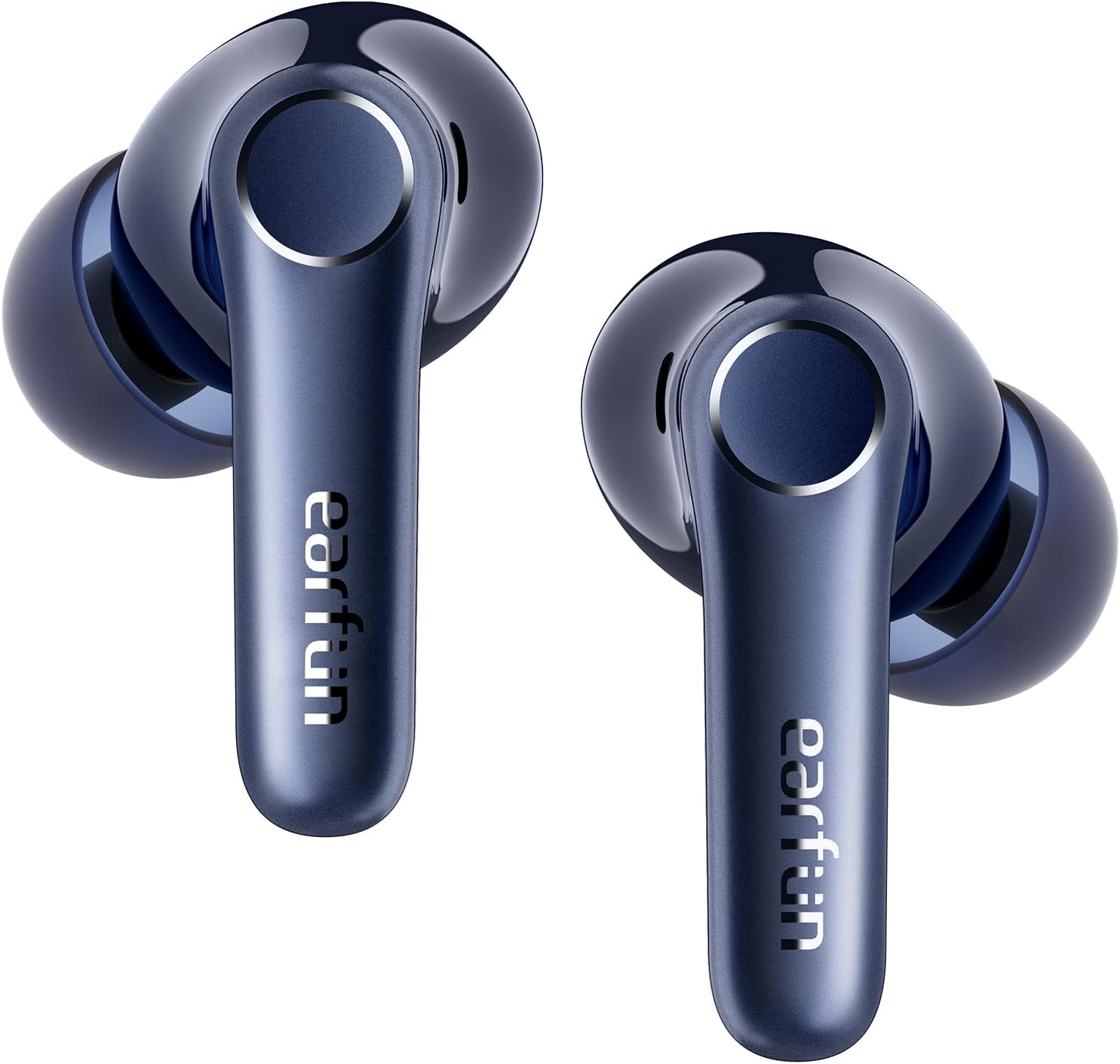
6. Soundcore Space A40 — The Compact Travel Champion
The Soundcore Space A40 is tailored directly for long-haul travellers and commuters who want an unobtrusive, stemless fit. These pebble-sized earbuds tuck neatly inside the ear, making them comfortable enough to wear while resting your head against a travel pillow.
Featuring adaptive noise cancellation that reduces ambient noise by up to 98%, LDAC support, wireless charging compatibility, and a 50-hour total playback battery, the Space A40 provides seamless travel utility. While its microphone performance in windy conditions is merely average, its music reproduction and noise isolation are consistently strong.
7. JBL Live Pro 2 TWS — The Dynamic Workout & Office Hybrid
The JBL Live Pro 2 TWS bridges the gap between daily office calls and sweaty gym sessions. With an IPX5 water-resistance rating, oval acoustic tubes for a secure ergonomic seal, and JBL’s punchy Signature Sound, these stemmed earbuds stay firmly anchored during vigorous movement.
Its 6 beamforming microphones isolate vocals effectively in open-plan offices, while True Adaptive Noise Cancelling adjusts automatically to changing ambient levels. With 40 hours of combined battery life and fast Qi wireless charging, it remains a durable, multi-purpose workhorse for active listeners.
Buying Guide: How to Choose the Right Pair Under £100
1. Codec Support: LDAC vs AAC
If you use an Android smartphone and subscribe to high-resolution streaming services like Apple Music, Tidal, or Qobuz, prioritise earbuds with LDAC support (such as the Nothing Ear (a) or Anker Soundcore Liberty 4 NC). LDAC transmits up to 990 kbps—roughly three times the data of standard Bluetooth codecs. If you are an iPhone user, LDAC is irrelevant because iOS devices stream exclusively via AAC and SBC; in that case, focus on driver quality, ergonomic comfort, and digital tuning like Sony’s DSEE engine.
2. Stemmed vs Stemless Earbud Profiles
Stemmed earbuds (like Nothing Ear (a) and JBL Live Pro 2) place the voice microphones closer to your mouth, which generally improves speech clarity on phone calls. They also enable pinch controls, preventing the ear-canal pressure caused by tapping. Stemless earbuds (like Sony WF-C700N and Soundcore Space A40) provide a low-profile, discrete fit that won’t snag on scarves, beanies, or motorcycle helmets.
3. Real-World Battery Needs
Always distinguish between single-charge earbud playtime and total case capacity. If you commute 1–2 hours daily, a 15-hour case like Sony’s is fine for weekly top-ups. However, if you travel regularly without easy access to mains power, models offering 40 to 52 hours (such as EarFun Air Pro 4 or Soundcore Liberty 4 NC) offer far greater peace of mind.
Alternatives to Consider
If neither the Nothing Ear (a) nor Sony WF-C700N feels like the perfect match for your specific requirements, consider these two targeted alternatives:
- Cheaper Budget Alternative: The CMF by Nothing Buds Pro 2 offers 50 dB hybrid ANC, LDAC audio, and an ingenious case-mounted Smart Dial for under £60, making it an unbeatable choice for price-conscious shoppers.
- Heavy-Duty Commuter Alternative: The Anker Soundcore Liberty 4 NC provides class-leading 98.5% noise isolation, wireless charging, and a 50-hour battery reserve if pure silence on public transport is your primary goal.
Final Verdict: Which Pair Takes the Crown?
Both models represent outstanding engineering under the £100 barrier, but the Nothing Ear (a) emerges as the overall winner. By delivering superior 45 dB adaptive noise cancellation, Hi-Res LDAC playback, double the total case battery life (42.5 hours vs 15 hours), and a refreshing transparent design with intuitive pinch controls, it sets the benchmark for what sub-£100 earbuds can achieve.
The Sony WF-C700N remains the top recommendation for listeners with smaller ear canals who value featherlight, stemless comfort, warm natural tuning, and superior wind isolation during outdoor walks. Whichever you choose, you are getting flagship-tier listening convenience without the premium price tag.