As an Amazon Associate I earn from qualifying purchases. This page contains affiliate links, and I may earn a commission at no extra cost to you.
Buying for Christmas? Start with our Yoto vs Toniebox (incl. Toniebox Lite) guide, with picks by age.
The Bedtime Projector Phenomenon: Magic or Gimmick?
Short-form social media videos have turned the Little Tikes Story Dream Machine Starter Set into one of the most visible toddler bedtime gifts in recent memory. Seeing colourful storybook illustrations beamed onto a darkened bedroom ceiling while a soothing narrator reads aloud looks like an effortless bedtime hack. For parents struggling with winding-down routines, the promise of quiet, focused engagement without a traditional backlit tablet screen is immediately appealing.
However, turning vintage picture books into a mini optical projection system introduces physical trade-offs that purely audio-focused players never have to confront. Wall distance, ambient room light, manual focusing dials, and the recurring cost of proprietary visual cartridges all factor into whether this plastic projector remains a daily bedtime staple or ends up gathering dust on a shelf after three weeks.
This buying guide examines the engineering, optical clarity, expansion economics, and real-world durability of the Story Dream Machine, contrasting it directly with the two heavyweights of the screen-free children's audio market: the Tonies Toniebox Audio Starter Set Currently unavailable on Amazon and the Yoto Player (3rd Generation).
Little Tikes Story Dream Machine: Features, Hardware, and Daily Use
At its core, the Little Tikes Story Dream Machine Starter Set is a self-contained, battery-operated optical projector combined with an internal audio player and nightlight. The starter pack comes bundled with three classic Little Golden Book story cartridges (The Poky Little Puppy, Tawny Scrawny Lion, and The Saggy Baggy Elephant) alongside one Poky Little Puppy character figure that mounts on top of the unit.
The physical design prioritises toddler usability. Large, tactile buttons handle play, pause, rewind, fast-forward, and volume adjustments. There is a built-in carrying handle, and the chassis features side-mounted storage slots where cartridges can be stowed when not in use. When a cartridge is inserted into the side slot, the machine reads the track data, projects the corresponding illustrated slide onto the wall or ceiling, and plays synchronised narration accompanied by subtle background music and character sound effects.
Projection Quality and Room Setup Constraints
Unlike digital home cinema projectors with dynamic autofocus and high lumen outputs, the Story Dream Machine relies on a fixed-output LED lamp and a manual focus ring situated around the front lens. Based on manufacturer specifications and verified owner experiences, achieving a crisp, readable image requires careful positioning:
- Ambient Light Requirements: The projector is designed strictly for dark rooms. In broad daylight or a bedroom with strong late-afternoon sun filtering through standard curtains, the projected image washes out quickly. Blackout blinds or an entirely darkened bedtime environment are necessary for clear visuals.
- Projection Throw Distance: The sweet spot for clear focus sits between 60 centimetres and 2 metres from the projection surface. Place it too close and the image is tiny; place it across a large master bedroom and the LED light disperses, reducing sharpness.
- Text Legibility: The system beams the actual storybook text alongside illustrations to promote word recognition. While central text is generally legible when the lens focus ring is dialled in, the edges of the projected frame can show slight softening if the projector is angled sharply upward from a low bedside table.
Nightlight and White Noise Capabilities
When storytime ends, the device doubles as a bedside soother. By removing the story cartridge and leaving the character figure on top, the unit switches into a nightlight mode. It provides five different ambient sound profiles (including white noise and gentle instrumental lullabies) paired with a soft glowing light display. For parents hoping to streamline bedside clutter, combining a story machine and sleep soother in one portable footprint is a practical touch.
How It Compares: Projector vs Pure Audio Players
Before investing in an ecosystem, parents need to decide whether visual projection adds genuine value to their child's bedtime routine or simply creates an extra layer of stimulation right before sleep.
| Product | Primary Content Format | Key Hardware Strength | Price Band | Amazon Link |
|---|---|---|---|---|
| Little Tikes Story Dream Machine Starter Set | Projected slides + Audio narration | Integrated visual story projection & nightlight | Mid-range | See it on Amazon |
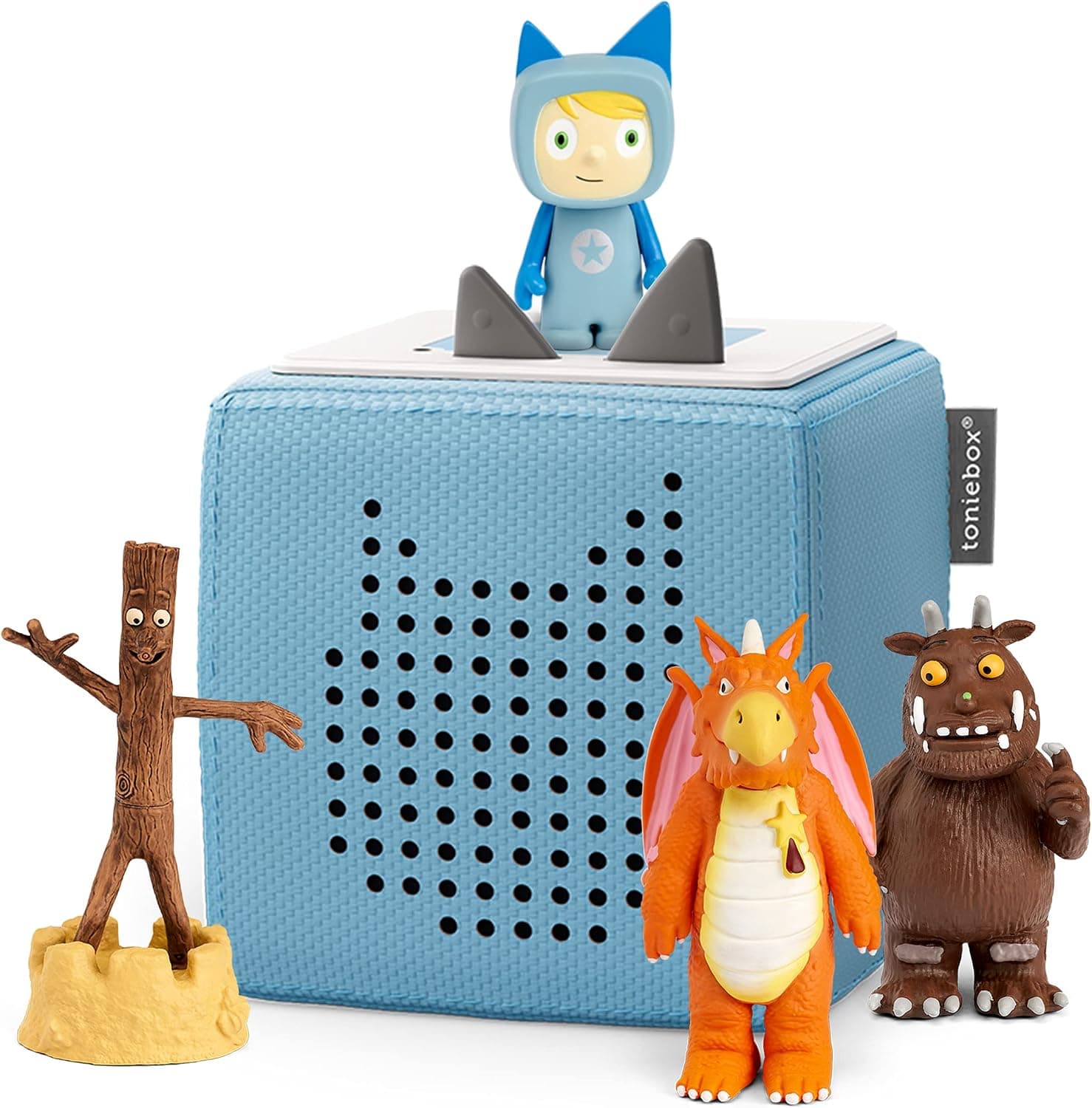
| Tonies Toniebox Audio Starter Set | Audio via tactile physical figurines | Padded, shockproof, virtually indestructible build | Mid-range | Currently unavailable on Amazon |
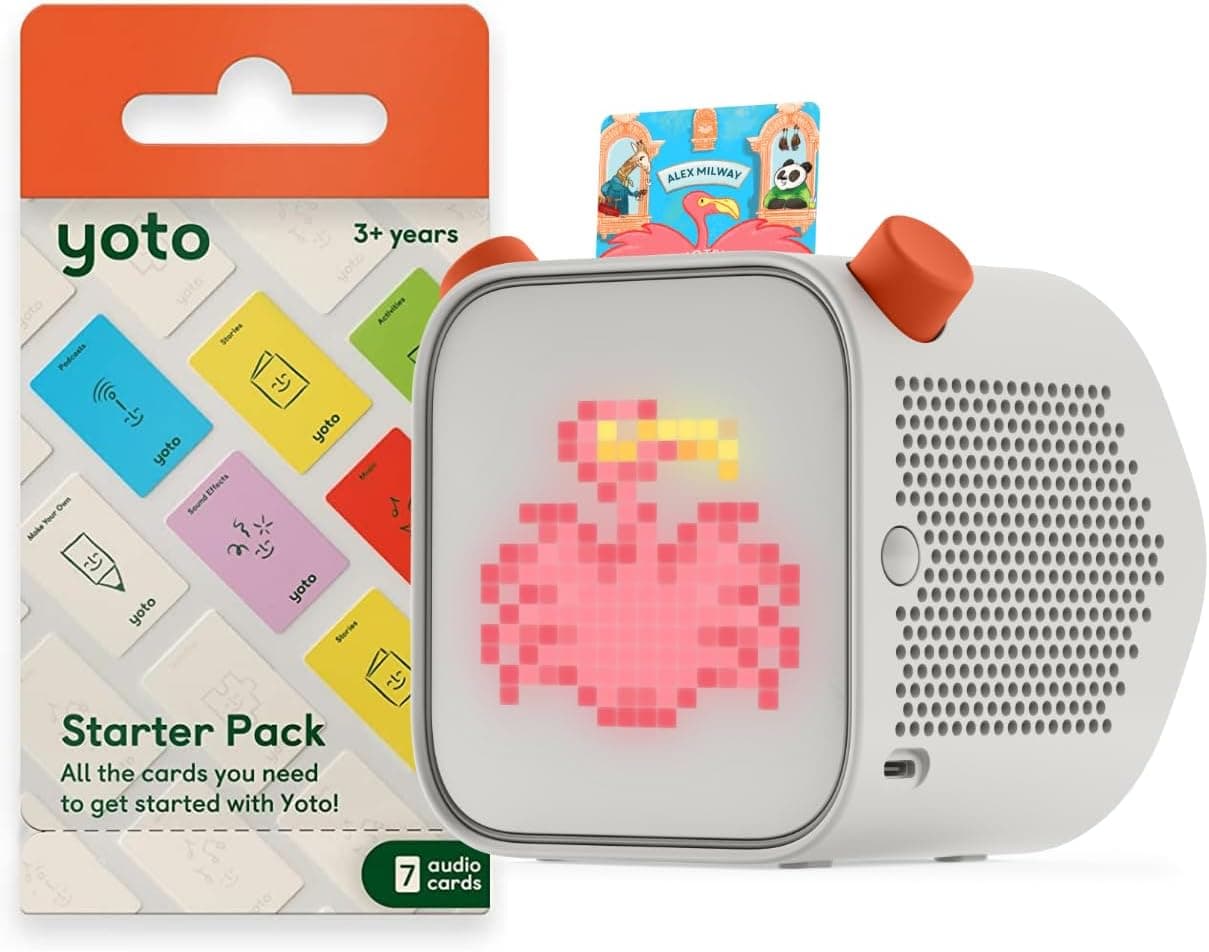
| Yoto Player (3rd Generation) | Audio via smart NFC cards | 16-hour battery, 32GB memory, pixel display, grows to age 12+ | Premium | See it on Amazon |
The Cartridge Problem: Content Longevity and Library Costs
One of the biggest differences between the Story Dream Machine and established audio players lies in catalogue depth and longevity. The Story Dream Machine relies on physical film-and-chip cartridges. Because each cartridge requires licensed visual artwork formatted specifically for the projector's internal slide mechanism, the library expands at a much slower rate than pure digital audio platforms.
While Little Tikes has expanded into collections featuring licensed properties like Sesame Street, The Berenstain Bears, and modern story collections, each story cartridge typically runs for only 3 to 6 minutes. A 3-pack of cartridges provides roughly 12 to 18 minutes of total content. If your toddler demands continuous storytelling, you will find yourself swapping cartridges frequently or repeating the same three stories nightly.
By comparison, a single audio figure or smart card on rival systems often contains 30 to 90 minutes of audio, chapter books, full-length educational podcasts, or custom parent recordings.
Alternatives to Consider
1. Tonies Toniebox: The Indestructible Audio Player for Toddlers
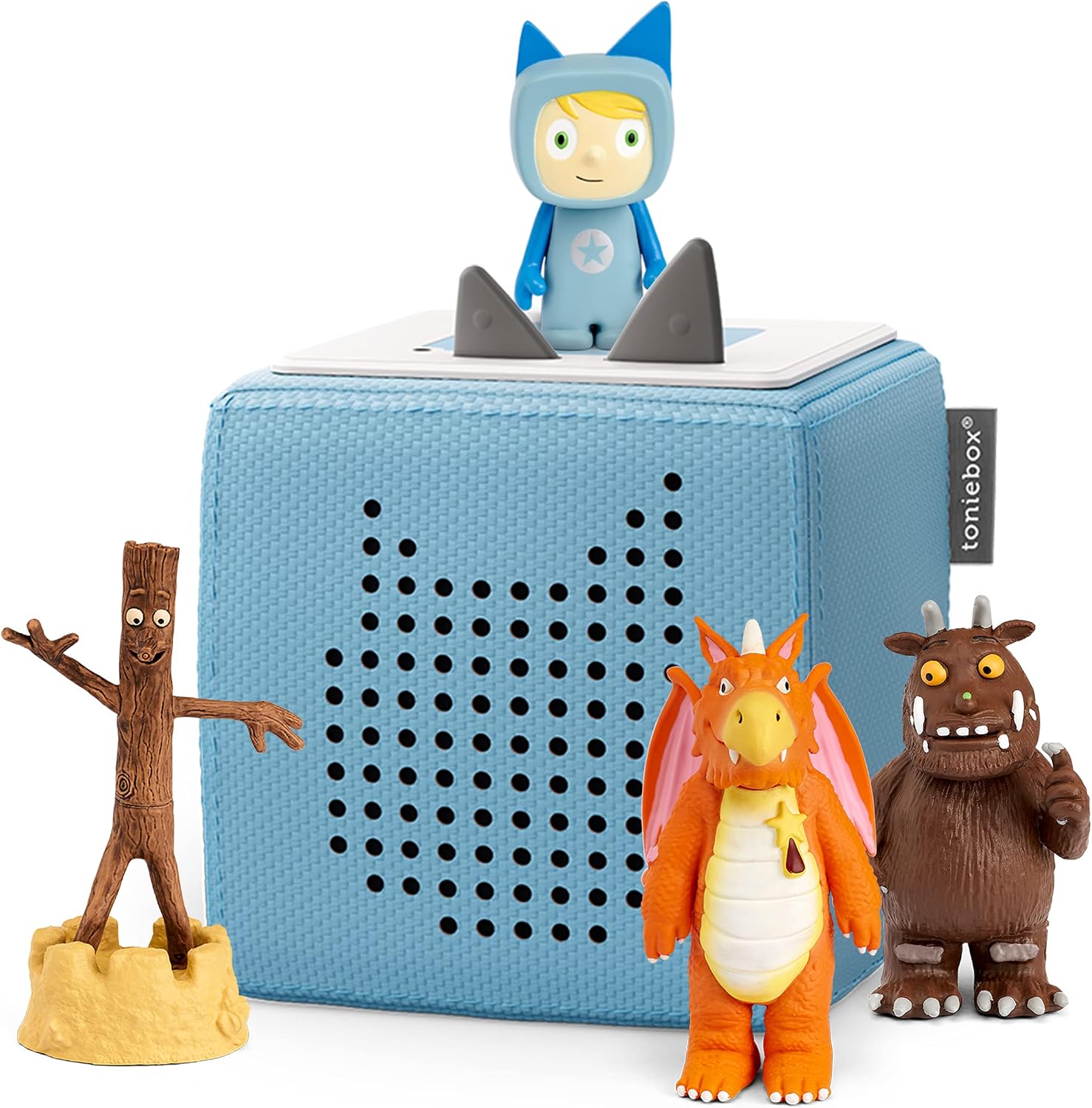
If your primary goal is fostering independent play for a child between 18 months and 4 years old, the Tonies Toniebox Audio Starter Set Currently unavailable on Amazon remains a benchmark. Wrapped in soft, padded, water-repellent fabric, it is engineered specifically to survive being dropped from bunk beds, stepped on, or knocked off bedside tables. Children operate it intuitively: popping a magnetic hand-painted figurine on top starts the audio, pinching the rubber ears adjusts the volume, and slapping the sides skips tracks. With over 200 character figurines available, the content library spans everything from classic nursery rhymes to major animated film soundtracks.
2. Yoto Player (3rd Generation): The Long-Term Bedtime & Audio Hub
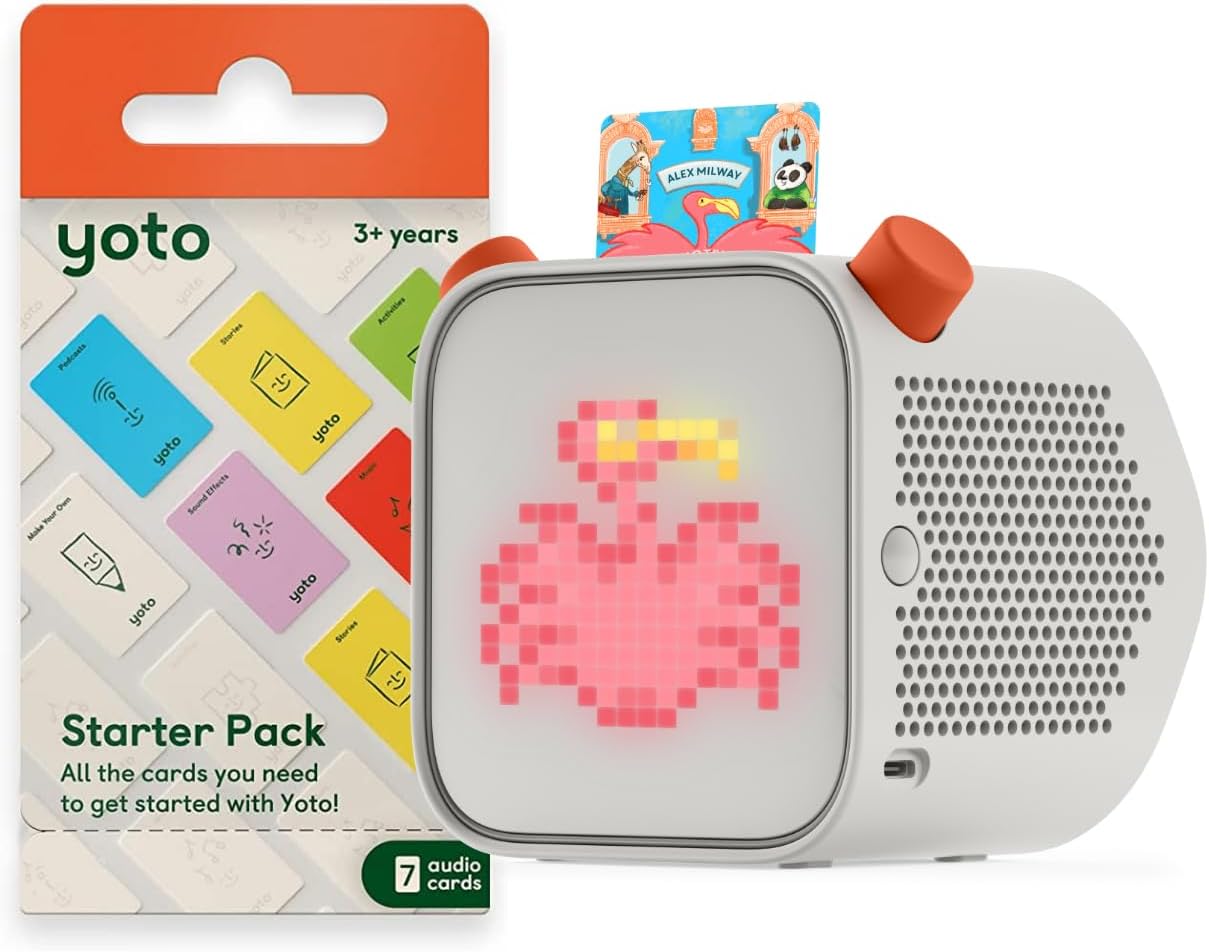
For parents seeking a device that will remain relevant from the toddler years well into primary school, the Yoto Player (3rd Generation) represents the most capable all-around hardware platform. Using durable credit-card-style NFC cards, the Yoto Player avoids physical mechanical parts entirely. It features a built-in pixel display, customisable nightlight, room temperature thermometer, headphone jack, 16-hour rechargeable battery, and 32GB of internal storage capable of holding over 600 hours of offline audio.
Unlike the Story Dream Machine's 5-minute story limit, the Yoto library includes full unabridged audiobooks ranging from Julia Donaldson picture books to Roald Dahl novels and classic chapter books, plus free daily podcasts and child-safe radio stations.
Durability, Power, and Portability Considerations
How do these devices hold up when handled without direct adult supervision?
- Power Source: The Story Dream Machine typically runs on 4 x AA batteries (though some regional variants include a micro-USB power cable port). For sustained bedtime use, rechargeable AA batteries are practically essential if you choose not to run a cord to a bedside socket. The Toniebox uses an internal rechargeable battery offering roughly 7 hours of playback via a drop-in charging dock. The Yoto Player (3rd Generation) features modern USB-C fast charging alongside optional wireless dock compatibility, delivering up to 16 hours of continuous listening per charge.
- Drop Durability: The Story Dream Machine is made of rigid ABS plastic. While sturdy enough for typical playroom use, it contains optical lenses, focusing barrels, and internal slide-advance motors that do not appreciate being dropped onto hard floorboards. The Toniebox, by comparison, is effectively a padded foam cube designed explicitly for rough tumble.
- Travel Convenience: The Story Dream Machine can be used in a hotel room or on holiday provided you have a clean, light-coloured ceiling or blank wall to project onto. Pure audio players like Yoto and Toniebox are inherently more flexible for car journeys, aeroplane flights, and pushchair rides where projection simply is not an option.
Pros and Cons: Little Tikes Story Dream Machine
Pros:
- Brings illustrated storybooks directly onto walls and ceilings, creating a cosy visual bedtime experience.
- Large, high-contrast buttons make manual control straightforward for two- and three-year-olds.
- Integrated white noise and nightlight functions mean fewer gadgets cluttering the bedside table.
- Includes physical side slots to keep loose story cartridges organised with the base unit.
Cons:
- Short content length: individual story cartridges generally run for only 3 to 6 minutes.
- Requires a genuinely dark room and deliberate positioning/focusing to achieve a sharp image.
- Narrower long-term content catalogue compared to established audio-only ecosystems.
- Moving optical and mechanical components are more vulnerable to drop damage than solid-state players.
Who Should Buy the Little Tikes Story Dream Machine?
The Little Tikes Story Dream Machine Starter Set makes genuine sense in a specific scenario: you are buying a gift for a child aged 2 to 4 who is visually driven and resists winding down to pure voice audio alone. The projected illustrations provide a calming visual focal point that keeps a toddler in bed looking upward at the ceiling rather than wandering around the room.
However, if your priority is long-term audio value, rugged durability, massive content variety, and hardware that will still be used when your child is 7 or 8 years old, an audio-first system like the Yoto Player (3rd Generation) or Tonies Toniebox Audio Starter Set Currently unavailable on Amazon provides far greater utility per pound spent.