
As an Amazon Associate I earn from qualifying purchases. This page contains affiliate links, and I may earn a commission at no extra cost to you.
Trying to find an engaging, screen-free educational gift that does not end in tears or bent wires is surprisingly tricky. Traditional breadboards and soldering irons carry a steep learning curve and safety hazards for younger makers. Solder-free circuit kits solve that problem entirely by using interlocking snap-connectors, spring terminals, and modular blocks that let children assemble functioning FM radios, burglar alarms, and sensory circuits within minutes.
If you need a reliable birthday or holiday gift under £60 that teaches fundamental electrical engineering concepts without parental troubleshooting fatigue, four distinct options stand out on the market today. Based on published technical specifications, experiment variety, component durability, and verified owner feedback, this guide breaks down the strengths and trade-offs of each system.
Quick Comparison Table
| Product | Key Feature | Ages | Price Band | Recommendation |
|---|---|---|---|---|
| John Adams Hot Wires Electronics Kit | Snap-together modular tracks, 100 experiments | 8+ | Budget to Mid-range (£25–£40) | See it on Amazon |
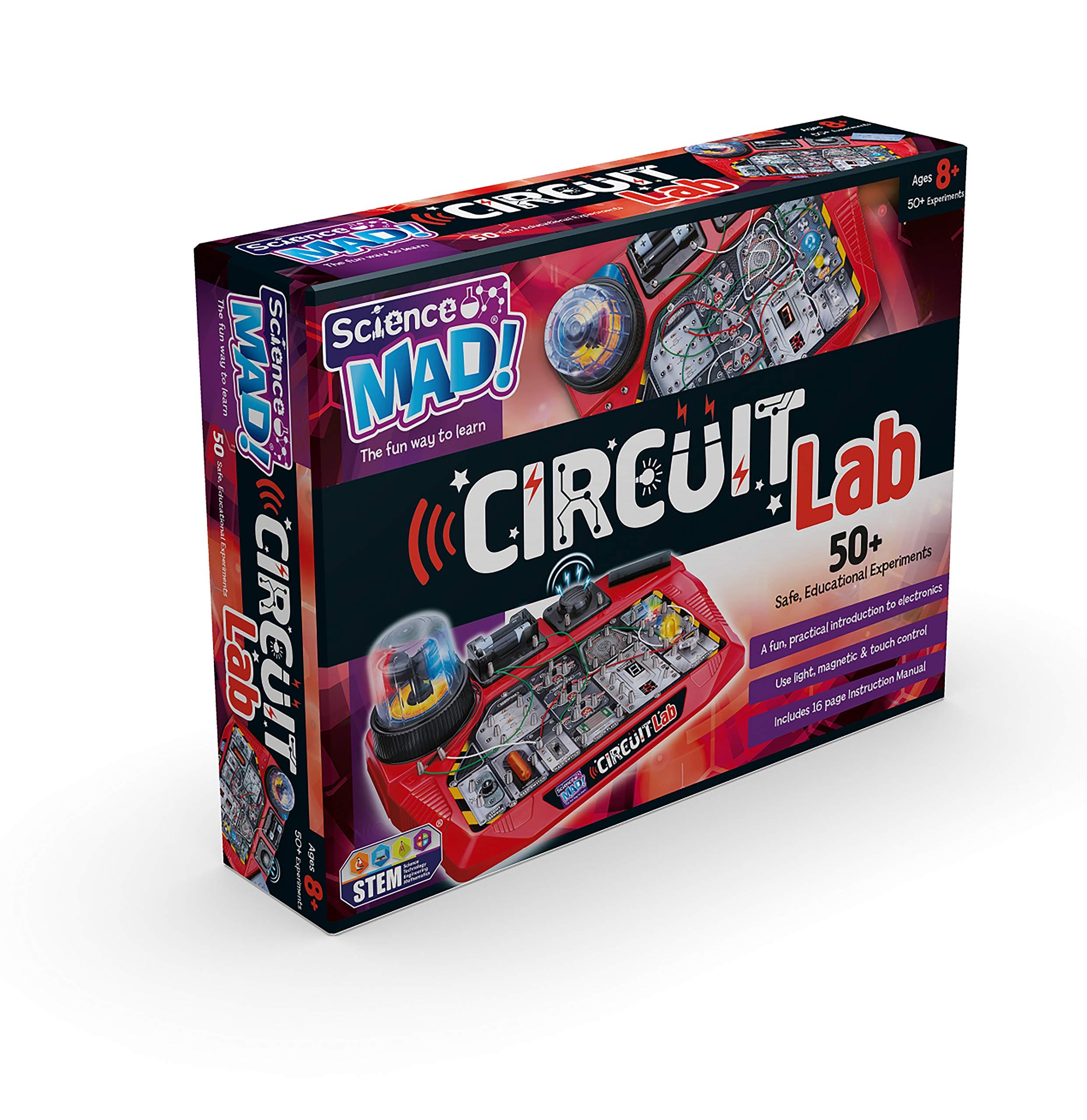
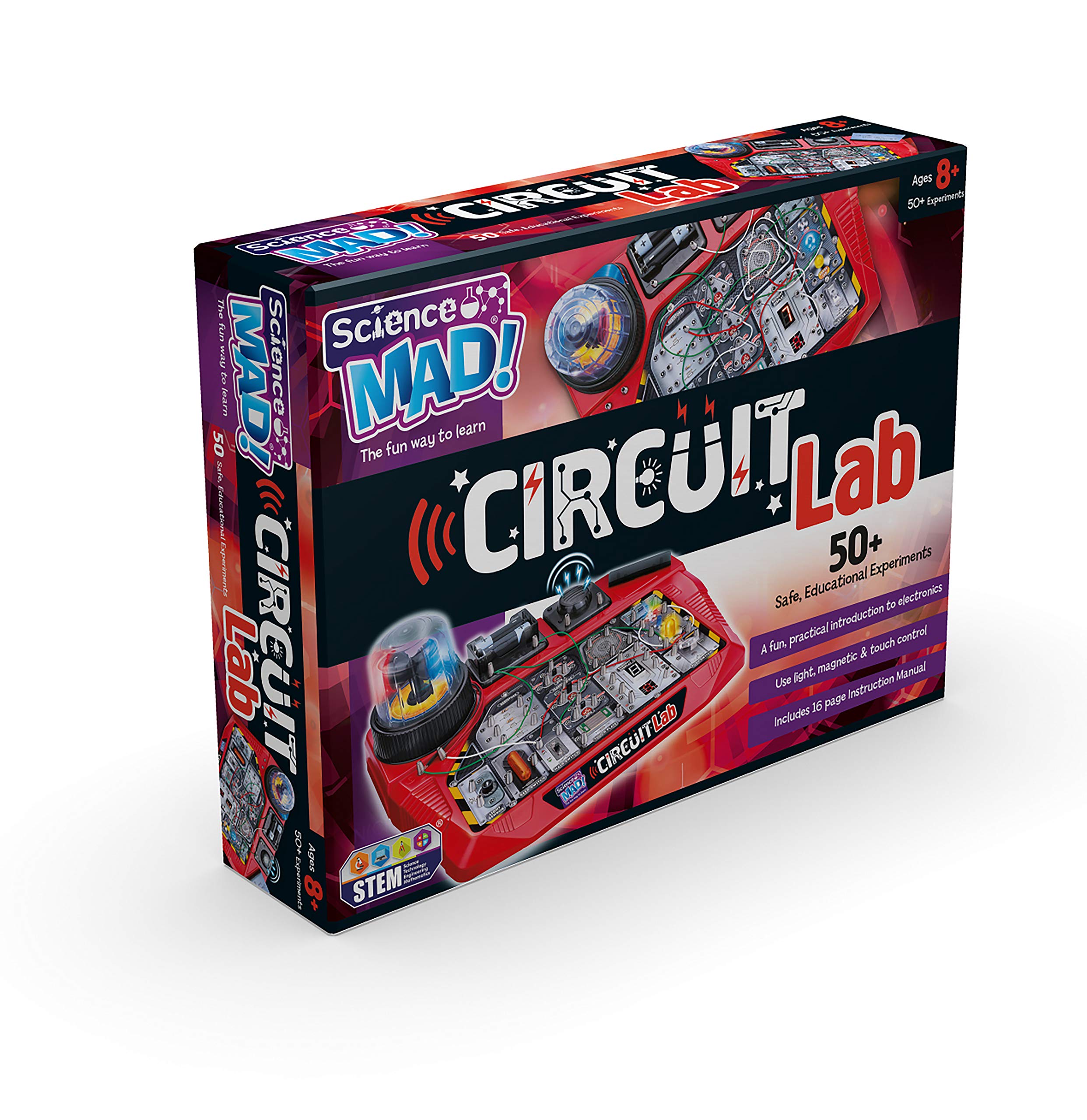
| Science Mad Circuit Lab | Console layout with spring terminals & 50 projects | 8+ | Budget (£20–£35) | See it on Amazon |
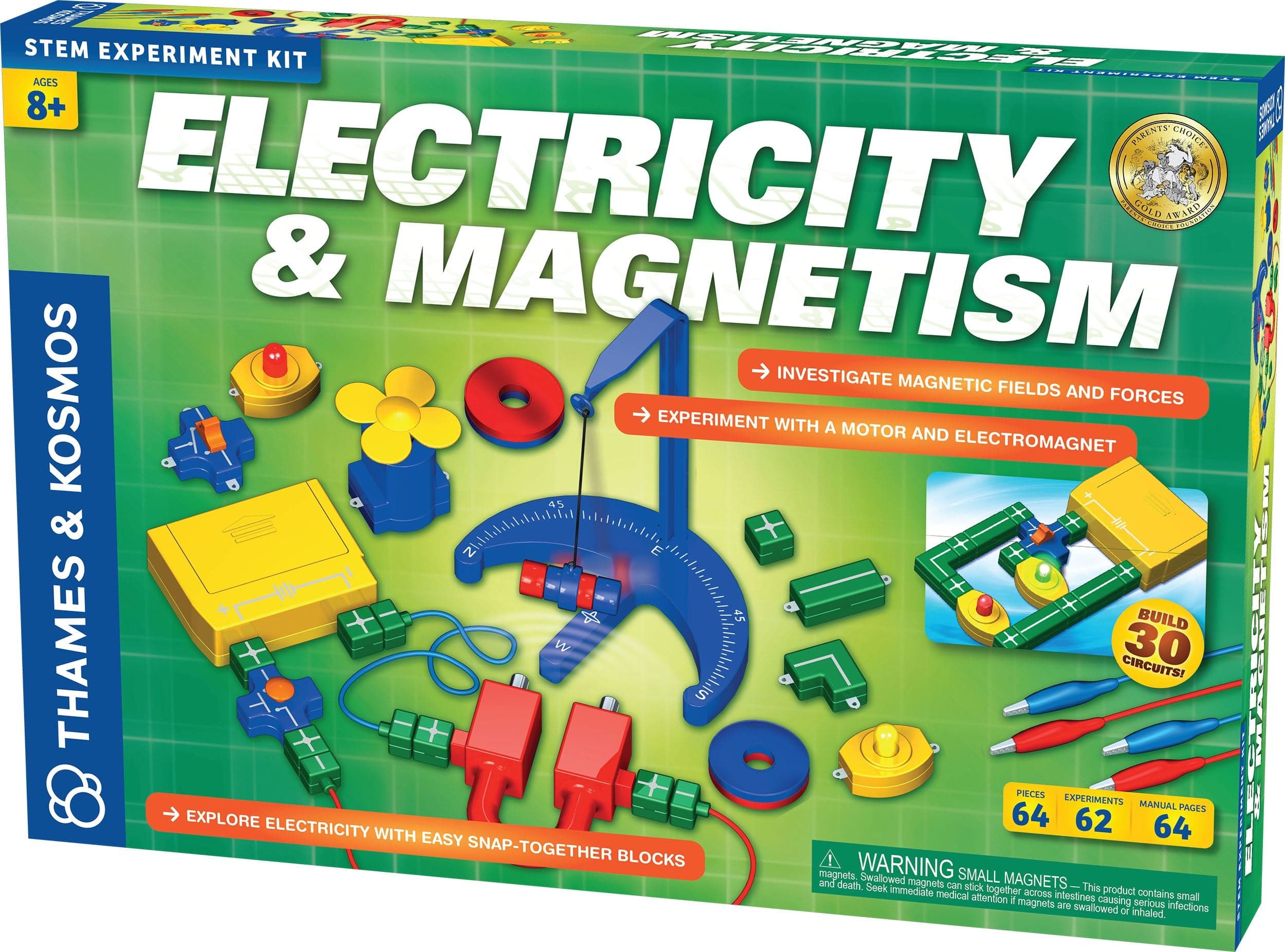
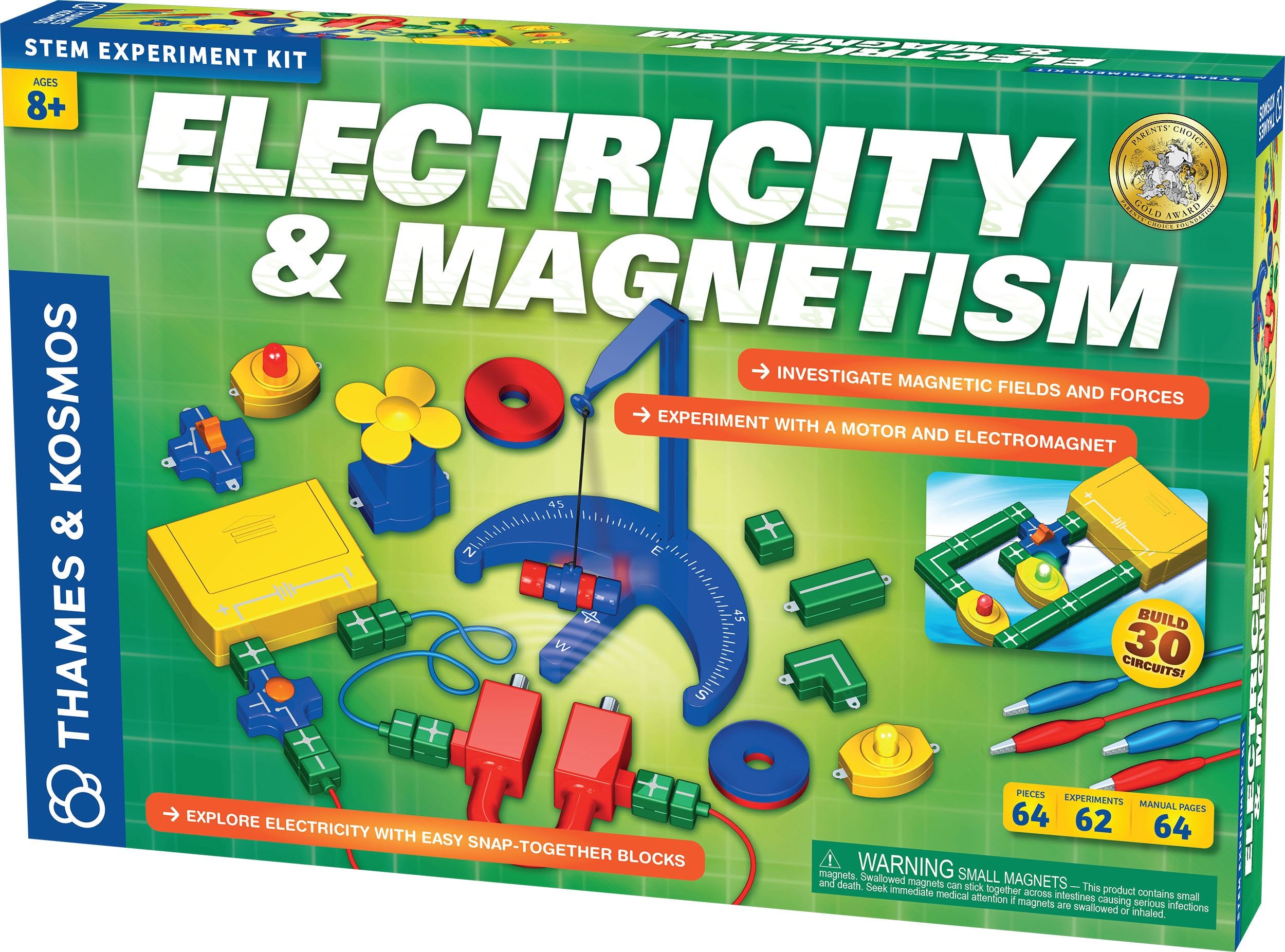
| Thames & Kosmos Electricity & Magnetism Science Kit | Electromagnetism focus, 64-page educational manual | 8+ | Mid-range (£35–£50) | See it on Amazon |
Detailed Product Breakdowns
1. John Adams Hot Wires Electronics Kit — Best All-Rounder
The John Adams Hot Wires Electronics Kit remains one of the most accessible entry points into electronics for children aged 8 and above. The core design uses colour-coded, heavy-duty plastic press-stud components that snap seamlessly onto a rigid transparent baseboard. This removes the fiddly frustration of loose wires while keeping electrical conductivity completely transparent to the user.
The included colour-coded booklet contains 100 step-by-step construction activities. Experiments range from simple light switch circuits and flying fan rotors to complex multi-stage circuits like a functioning burglar alarm, a light-sensitive siren, and a basic lie detector. Because the set aligns closely with UK Key Stage 2 and Key Stage 3 science curriculum standards, it provides direct educational reinforcement alongside the play value.
- Power Source: Requires 4 x AA batteries (not included).
- Component System: Snap-grid connectors with integrated resistors, switches, speaker, and motor.
- Strengths: Highly durable plastic snaps, virtually impossible to assemble incorrectly if following diagrams.
- Drawbacks: Requires a steady supply of AA batteries; baseboard size limits open-ended circuit scaling.

2. Science Mad Circuit Lab — Best for Classic Console Experimentation
For children who prefer a retro electronics workbench feel, the Science Mad Circuit Lab takes a different physical approach. Rather than modular baseboard snaps, this kit features an all-in-one console board pre-fitted with discrete electronic components—including transistors, resistors, capacitors, touch pads, a magnetic switch, and an LED number display.
Children connect components using pre-cut wire jumpers inserted into tension-spring contact terminals. The included 16-page guide outlines 50 distinct experiments that gradually build in complexity. It starts with basic closed circuits and progresses toward practical logic challenges, such as a functional light intensity indicator and digital numeric readouts. This gives kids a tangible introduction to real circuit schematic diagrams.
- Design: Self-contained experimenter console with spring terminals.
- Learning Value: Introduces discrete semiconductor roles (transistors, diodes) more visibly than snap modules.
- Strengths: Everything stays securely mounted to the board; excellent introduction to real-world wiring logic.
- Drawbacks: Spring terminals can feel fiddly for smaller hands; wires can kink over time if pulled aggressively.
3. Thames & Kosmos Electricity & Magnetism Science Kit — Best for Pure Science Concepts
Thames & Kosmos is renowned for textbook-grade educational kits, and the Thames & Kosmos Electricity & Magnetism Science Kit lives up to that reputation. While other sets focus primarily on making sirens buzz or lights flash, this kit explores the physical link between electrical currents and magnetic fields.
Using robust snap-together building blocks alongside bar magnets, iron filings, compasses, and magnetic switches, the set allows kids to construct functioning electromagnets, magnetic relays, and a basic electric motor. The standout feature is its comprehensive 64-page full-colour experiment manual, which reads like an engaging science handbook rather than just a dry assembly guide.
- Approach: Fundamental physics exploration combining electrical circuits with magnetic forces.
- Manual Quality: 64-page full-colour illustrated guide with theoretical explanations.
- Strengths: Superior depth of scientific explanation; great for inquisitive children who ask "why" things work.
- Drawbacks: Fewer "toy-like" flash-and-bang outputs compared to the Hot Wires kit.
Buying Guide: What to Look for in Solder-Free Circuit Sets
1. Connection Type: Snaps vs Springs
Snap-together tracks (as seen in Hot Wires) provide the most durable, frustration-free connection for 8- to 10-year-olds who want immediate feedback without delicate wire handling. Spring terminals (like the Science Mad board) teach manual dexterity and schematic tracking.
2. Curriculum Alignment vs Freeform Experimentation
If your priority is supporting school coursework in physics and STEM, kits with structured experiment manuals like the Thames & Kosmos Electricity & Magnetism Science Kit or John Adams Hot Wires Electronics Kit ensure concepts like resistance, polarity, and magnetic fields are explained clearly.
Alternatives to Consider
If you want a budget-friendly starter set that keeps components neatly organised in one place, the Science Mad Circuit Lab offers unbeatable value without needing loose baseboards.
Final Verdict
For most parents and gift-givers seeking a dependable, high-fun STEM gift under £60, the John Adams Hot Wires Electronics Kit hits the ideal sweet spot between educational depth, component durability, and immediate playability.