As an Amazon Associate I earn from qualifying purchases. This page contains affiliate links, and I may earn a commission at no extra cost to you.
It's mid-November, there are two chunky boxes in your basket, and the choice between them has quietly eaten an evening of your life. Wingspan, the bird game that won the Kennerspiel des Jahres — Germany's prize for connoisseur games — and has barely left the hobby charts since. Ark Nova, the zoo epic that climbed to the very top of BoardGameGeek's all-time rankings. Both sit at the flagship end of their publishers' catalogues, and both have a history of dipping around Black Friday — which is exactly the fortnight you're shopping in, and worth remembering if the recipient isn't waiting on a birthday.
The real situation, though, is simpler than the forums make it look. You're buying one substantial game: for your own shelf, for a partner whose collection has outgrown the party-game stage, or for a friend group that wants something with proper weight. Both of these will look fantastic wrapped. Only one will genuinely fit the table you have in front of you. That's the bit worth getting right, so let's do it properly.
The short answer
If you want the verdict before the detail: Wingspan is the better first big-box purchase for most tables, and Ark Nova is the better long-term obsession for a settled group that already plays heavy games. There's no wrong answer between them — there's only a wrong match for your group — and the Everdell box further down is a different kind of purchase entirely.
| Game | Key specs | Price band | Verdict | Buy |
|---|---|---|---|---|
| Wingspan (Stonemaier Games) | 1–5 players, 40–70 minutes, card-driven engine-builder, ages 10+ | Under £50 | Best first purchase: quickest to teach, widest table appeal | See it on Amazon |
| Ark Nova (Feuerland Spiele) | 1–4 players, 90–150 minutes, heavy strategy euro, ages 14+ | Under £60 | Deepest experience of the two, for groups who'll give it full evenings | See it on Amazon |
| Everdell Complete Collection | Base game, every expansion and collector's-edition content in one box | Premium — £300+ | Splurge strictly for established Everdell devotees | See it on Amazon |
Wingspan: the bird game that earns its reputation
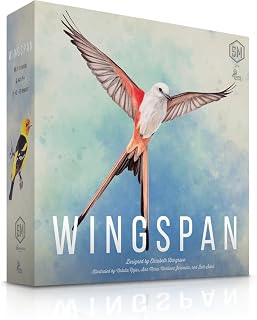
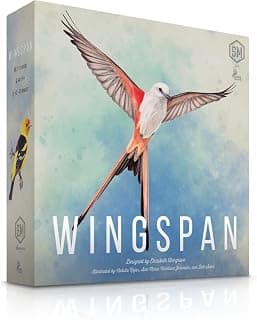
Wingspan is a competitive, medium-weight, card-driven engine-builder from designer Elizabeth Hargrave — engine-builder meaning every bird you play makes your later turns more productive, so a good game ends in a satisfying chain reaction. You play researchers, bird watchers and collectors attracting the best species to your network of wildlife preserves, and the theme isn't wallpaper: every card depicts a real bird, with genuine habitat detail sitting alongside its ability. It's a rare thing — a strategic game whose subject pulls newcomers in rather than putting them off.
On the table it charms before anyone has read a rule. There's a birdfeeder dice tower stacked with custom dice for gathering food, egg miniatures in a variety of colours, and hundreds of unique bird cards to build your preserve around. Each turn you take exactly one action — play a bird, gather food, lay eggs, or draw more cards — which keeps the pace brisk even with five players crowding the table. Rounds tighten as your preserve fills and your bird chain starts feeding itself, so the game peaks where it should rather than dragging. The cards double as tiny natural-history lessons, so don't be surprised if somebody reads out a wingspan fact mid-turn. It's one to five players, ages 10 and up, comfortable inside an evening with time left for a rematch, and the current second edition carries a solo Automa mode for the weeks the group can't assemble.
As a gift it's the safest of the three by a wide margin. It sells itself to the partner who watches Springwatch, the parent who feeds the garden robins, the teenager who's outgrown Monopoly but isn't ready for three-hour epics. Just as importantly, it works as well at two players as it does at five — and a game that needs four committed adults to sing rarely escapes its shrink wrap at all.
Two honest reservations. Interaction is mostly indirect, so groups that live for negotiation and sabotage will find it polite to a fault. And after a couple dozen plays the base set starts to feel familiar; Stonemaier publishes regional expansions for exactly that moment, so treat one as a probable follow-up rather than part of today's decision.
The case for Wingspan
- Teaches in minutes and finishes inside an evening, so it earns repeat table time instead of shelf admiration.
- Real birds, real facts and gorgeous art make it a gift that converts non-gamers rather than intimidating them.
- Solo Automa plus a one-to-five player range covers almost every situation, including couples.
- Hundreds of unique bird cards keep the starting hands and engines feeling fresh for ages.
Where it falls short
- Light on direct conflict — negotiation-hungry groups may find it too polite.
- Heavy euro veterans can outgrow the base set and will want an expansion sooner or later.
- The birdfeeder dice sprinkle in just enough luck to make serious optimisers grumble.
Ark Nova: the zoo epic for committed groups
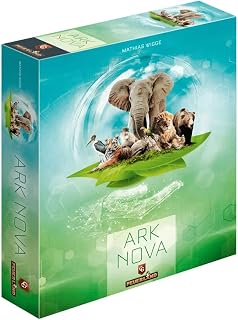
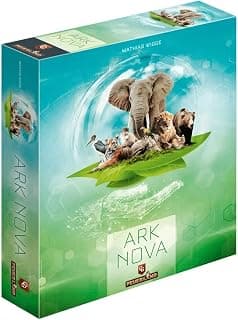
Ark Nova, designed by Mathias Wigge for Feuerland Spiele, asks you to plan and design a modern, scientifically managed zoo: build enclosures, accommodate animals, sponsor conservation projects around the world, and hire specialists whose abilities ripple through everything else you do. Victory is a genuinely clever race between your zoo's public appeal and its scientific reputation, with conservation points as the currency that settles it. And because the heart of the game is a 255-card line-up of animals, specialists, unique enclosures and projects — each with its own ability — no two zoos ever build the same way twice.
Two mechanics earn its reputation. First, your action cards aren't fixed: you can spend a turn strengthening a future action instead of using it, and timing those upgrades against everything else you want to do is where the strategic depth lives. Second, conservation isn't decoration — the projects are how you actually win, which gives all that optimisation a purpose most euros never find. Replayability is genuinely high; this is a game people reshuffle their evenings around.
Now the honest part. Officially it's one to four players, ages 14 and up, running 90 to 150 minutes — and first sessions with four routinely run longer, especially while everyone gets fluent in the iconography. The footprint is substantial: boards, card rows and a market of tiles that want a proper dining table rather than a coffee table, and a box that ranks among the chunkiest things you'll ever shelve. None of that is a flaw for the right group — the weight is where the depth comes from. Gift it to the wrong table, though, and there's a fair chance it's still sealed on a shelf by February.
There's a solo mode too, so it isn't held hostage to the group calendar entirely.
The case for Ark Nova
- Genuinely deep: 255 unique cards and interlocking systems that reward dozens upon dozens of plays.
- The upgradeable action row gives a long-game arc most euros never manage.
- Conservation projects give wins real meaning — strategy with something to say.
- A workable solo mode keeps it earning time between full-table nights.
Where it falls short
- Long: officially 90–150 minutes, and first games with four will stretch past that.
- Icon-dense rules mean the first session comes with the rulebook permanently open.
- Wants a large table and a group genuinely committed to a full evening.
- Overkill for casual players — this is a second or third heavy euro, never a first gift.
The differences that actually matter
Spec sheets undersell the real gaps between these two, so here they are in terms you'll actually feel at the table.
Teaching time. Wingspan goes from box to first turn in the time it takes to pour drinks; most players grasp it within two turns because there's only ever one action to choose. Ark Nova needs a committed explainer and a first session with patience for rulebook flipping. If you're teaching at a Christmas gathering with full glasses and competing conversations, that difference alone decides it.
Evening shape. Wingspan is a “we've got time for two games tonight” box. Ark Nova is a “clear the schedule” box. Both are legitimate; neither is interchangeable. Casual groups feel crushed by Ark Nova's length, while committed groups can find Wingspan pleasant but slight — so be honest about which table you're actually buying for.
Who's around the table. Wingspan bridges the gap between people who play Monopoly at Christmas and people who have opinions about action efficiency, and that bridge is precisely why it keeps selling years after release. Ark Nova assumes the whole table speaks euro fluently. Worth noting for family gifting, too: Wingspan is fine from age 10, Ark Nova is aimed at 14 and up, so a keen younger teen swings the decision on its own.
Long-term ceiling and expansion paths. Depth-wise Ark Nova goes further before it needs help — a settled group can make the base box last for years. Wingspan extends itself through its established range of European, Oceania and Asia expansions, each adding fresh birds and fresh scoring angles. Judge both by how many evenings they'll earn, not by which box is heavier: the game that reaches the table twice a month beats the deeper one that only surfaces at Christmas, every time.
Storage and shelf real estate. One more practical difference nobody warns you about. Wingspan's box tucks onto a standard shelf with room left for future expansions. Ark Nova's is a deep, heavy slab that claims a shelf and a dining table with equal confidence. If the recipient's collection is already bursting, that's a genuine consideration and not just a joke about shelf space — which nobody in this hobby treats as a joke anyway.
An alternative to consider: for the collector on your list
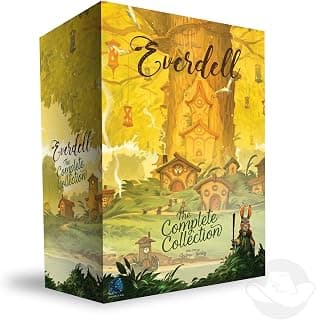
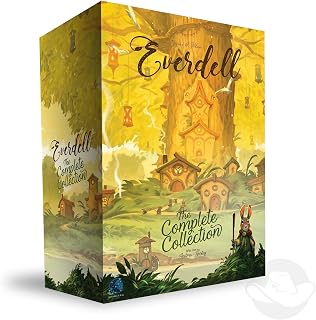
One more option, and it needs a blunt warning label. The Everdell Complete Collection bundles the base game with all of its expansions and the collector's-edition content: specialised trays and dividers for the boards, resources and cards, plus the beautifully illustrated consolidated rulebook and card reference known as the Gilded Book and the Archive. Everdell itself is a lovely worker-placement and tableau-building game — you send your little woodland workers out through the seasons, combine ever sharper cards, and race to finish your glowing critter city before anyone else. It shares Wingspan's welcoming surface and hides a surprisingly tough game underneath. And because everything lives in one box with proper trays, it solves the storage sprawl that plagues this game's expansion line.
Who is this genuinely for? Someone who already owns and loves Everdell and has been buying its expansions one by one — for them, it's the definitive shelf centrepiece and a genuinely memorable gift. Who should walk past it? Anyone new to the hobby. This box presumes the recipient long ago decided Everdell is their game; you wouldn't buy it as somebody's introduction, and at this tier you don't buy it on spec either. If they've only heard the name, the sensible route is the standard base game first — and if the collection is more than you had in mind, either Wingspan or Ark Nova makes better use of the money.
The final call
Buy for breadth and you won't regret it. Wingspan (Stonemaier Games) is the box that gets opened on Christmas afternoon and stays in rotation for years: quick to teach, quick to play, gorgeous in every component, and safe with everyone from a keen twelve-year-old to a sceptical partner. Choose Ark Nova (Feuerland Spiele) when the recipient already dreams in efficiency chains and will defend a three-hour slot in the calendar — there's precious little at that weight that does it better.
If your table this Christmas is a mixed one, the bird game deserves the shelf space first; Ark Nova becomes your magnificent second box the moment that group has earned it.